.svg)
10 Best AI content writing tools (2026)

Quick picks: the best AI writing tools for SEO in 2026
Don’t want to read the full comparison?
Here’s the fastest way to choose the right AI tools to actually write SEO content that ranks on Google and gets cited by AI.
How these tools compare
The table below compares tools based on their ability to write SEO content that ranks on Google and can be cited by AI, using the same evaluation framework across all platforms.
Decision tree and recommendations
Choosing the right AI writing tool depends on what kind of SEO content you want to produce and how much control you need.
This decision tree helps teams choose the right SEO content tool based on their goals, budget, and need for brand control.
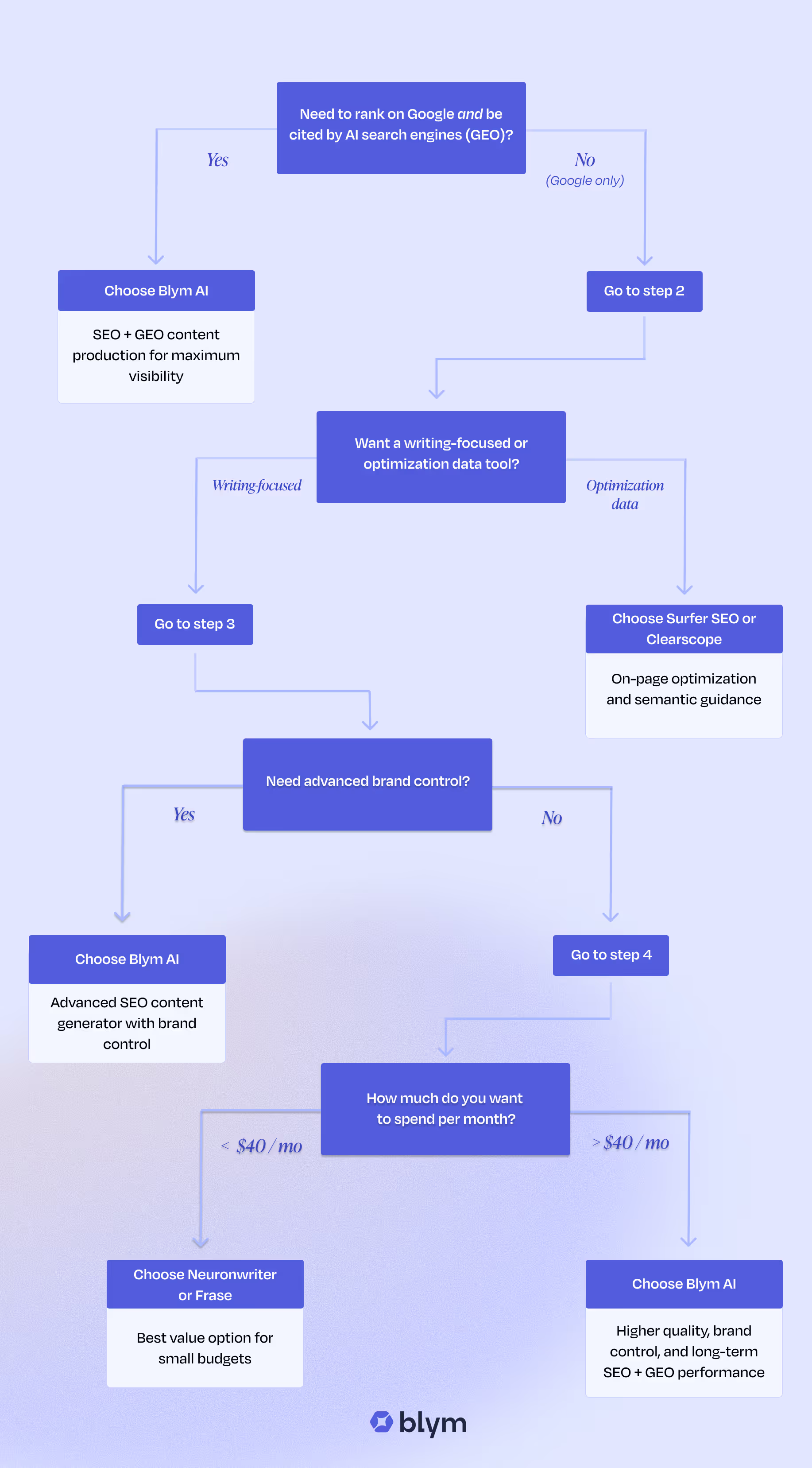
- If visibility on both Google and AI-powered search engines (GEO) is required, Blym AI is the recommended solution, as it is built specifically for SEO + GEO content production.
- For Google-only SEO, the decision depends on whether teams want a writing-focused workflow or just optimization data. Tools like Surfer SEO and Clearscope are suited for teams that already have writers and only need on-page optimization insights.
- When scalable quality and brand consistency matter, Blym AI remains the best choice.
- Finally, budget plays a key role: teams with a monthly budget under $40 can choose NeuronWriter or Frase, while teams willing to invest more than $40 per month should choose Blym AI for higher quality, control, and long-term performance.
These quick picks are meant to give you an instant snapshot — but choosing the right AI content generator depends on your goals, workflow, budget, and level of control you want to keep.
Below, we break down each tool in detail, explain where they truly shine (and where they fall short), and help you understand which solution actually fits your use case in 2026.
Keep reading for a full, side-by-side evaluation and real-world insights.
1. Blym AI
Blym represents a new category: the SEO + GEO Platform that combines SEO, GEO, and brand consistency. It bridges the gap between generic AI and technical optimization. By integrating brand consistency with search performance, it serves as the central engine for growth teams aiming for visibility in the age of AI search.
SEO depth: Google-first performance
Blym's approach starts with live data. The platform performs real-time SERP analysis to extract over 20 ranking factors including semantic entities and user intent signals. It integrates these insights to make every draft start with a baseline SEO score of 85+, covering semantic gaps before a human editor touches it. Blym's SERP analysis extracts ranking factors to achieve 85+ SEO scores consistently.
GEO readiness: AI orchestration and citation structure
Blym utilizes a proprietary multi-model approach, orchestrating four world-class AI providers simultaneously. It assigns specific models to specific tasks—logic, creativity, verification—making content structured for citation by Generative Engines. Blym's proprietary multi-model approach using 4 world-class AI providers delivers optimal results for both traditional search and AI citation.
Brand alignment
Blym solves the "generic AI voice" problem through deep context integration. It references uploaded brand guidelines and personas dynamically. The AI understands your business logic before it writes, maintaining consistent brand voice without the extensive editing required by generic wrappers. Blym's unique ability to maintain consistent brand voice without extensive editing sets it apart from generic tools.
Control level
Blym offers a "Guided Workflow." Users retain control at critical checkpoints:
- Brief & Intent: Define the angle.
- Outline: Validate against SERP data.
- Generation: Review section-by-section.
Pros
- Unified SEO & GEO: Optimizes for Google rankings and AI citations.
- Multi-Model Quality: Uses the best LLM for each task.
- Ready-to-Publish: Sticks strictly to brand guidelines.
- Live Data: Analysis based on real-time results.
Cons
- Not meant to replace a full SEO suite for audits/backlinks
- Position tracking is still described as in progress
- If your priority is “mass output,” this is not the “one-click factory” style tool
Pricing and plans
- Pricing Model: Monthly subscription.
- Entry price: $119/month
- What's included: Multi-model AI features, SEO analysis, unlimited projects and seats.
- Hidden costs: No credit burning.
- Cost reality: Competitive; replaces separate tools.
Best for
B2B SaaS, eCommerce and Growth Teams that want to internalize SEO content production for Google and AI search without sacrificing expertise and brand voice
Our review
Blym stands out as the only tool understanding modern search's dual requirements. Its multi-model orchestration delivers nuanced, factually dense output superior to single-model competitors.
2. Surfer SEO

Surfer SEO is primarily an on-page optimization and content scoring tool. It helps teams align content with what already ranks, rather than producing differentiated SEO content from scratch.
SEO depth: Google-first performance
Surfer analyzes live SERPs and extracts NLP terms, word counts, and structural patterns to calculate its well-known Content Score. It excels at aligning drafts with existing ranking pages, but less at interpreting intent creatively.
GEO readiness: AI orchestration and citation structure
Surfer is primarily SEO-only. Its AI writing features rely on standard models optimized for keyword insertion rather than GEO citation structure or multi-LLM orchestration.
Brand alignment
Surfer's AI focuses on mathematical keyword density, often resulting in robotic prose. It struggles to maintain a distinct brand voice against the directive to fit keywords.
Control level
Moderate. The editor is excellent for manual writing, but AI generation is rigid with limited intervention points.
Pros
- Industry Standard Metric: "Content Score."
- Deep Data: Excellent NLP entity visualization.
- Integrations: Jasper, WordPress, Google Docs.
Cons
- Robotic Output: Sacrifices readability for scores.
- Not built for GEO or AI citation logic
- AI writing often requires extensive rewriting
Pricing and plans
- Pricing model: Subscription + Credits.
- Entry price: $79/month
- Hidden costs: Surfer AI costs extra per article.
- Cost reality: Expensive for high volume.
Best for
SEO agencies that already write content manually and want a quantifiable optimization layer.
Our review
Surfer is top-tier for analysis but falls short as a standalone writer. It requires a skilled human driver to navigate the data.
3. Clearscope
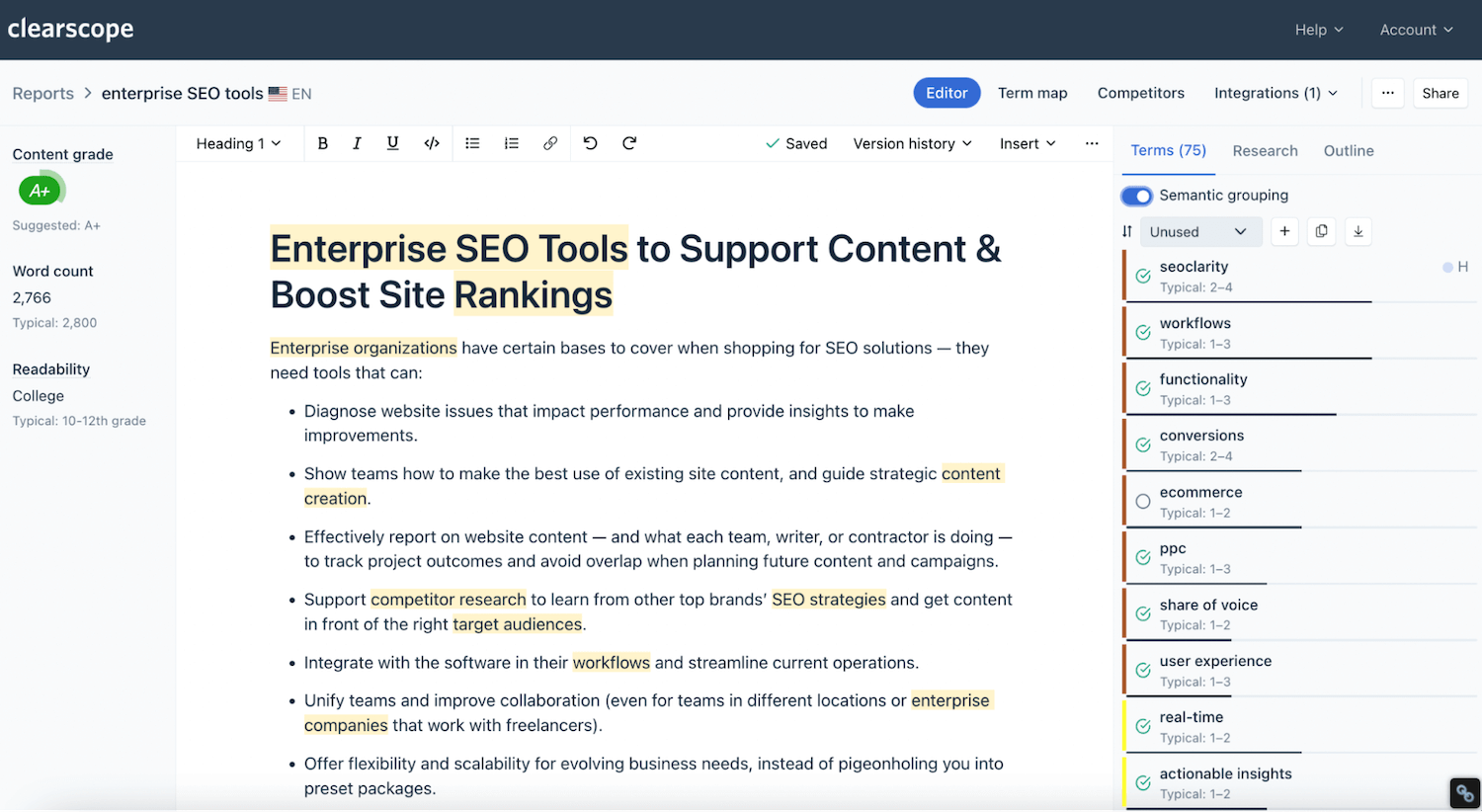
Clearscope is the premium standard for "Content Grading." It provides thorough topic coverage based on Google's semantic understanding (IBM Watson) but doesn't write for you.
SEO depth: Google-first performance
Clearscope offers high-fidelity semantic analysis, focusing on "topic comprehensiveness". It excels at identifying surface missing concepts that matter for relevance.
GEO readiness: AI orchestration and citation structure
Zero GEO readiness for generation. It's a text editor and grading tool, relying 100% on manual GEO strategy implementation.
Brand alignment
Neutral. It doesn't write, so it doesn't interfere, but writers may compromise voice to satisfy keyword grades.
Control level
Maximum control, manual effort. It's a QA tool for humans, lacking automated creation workflows.
Pros
- High-quality semantic recommendations
- Clean, distraction-free editor
- Trusted by large editorial teams
Cons
- No AI Writing: Must write manually.
- Price: Very expensive.
- Limited Scope: Grading only.
Pricing and plans
- Pricing model: Seat-based subscription.
- Entry price: $129/month
- Hidden costs: Report limits by plan
- Cost reality: Most expensive per article.
Best for
Enterprise Content Teams with budgets and skilled writers.
Our review
Clearscope is a luxury grading tool. Paying premium prices for zero generative capabilities is hard to justify for agile teams in 2026.
4. Frase
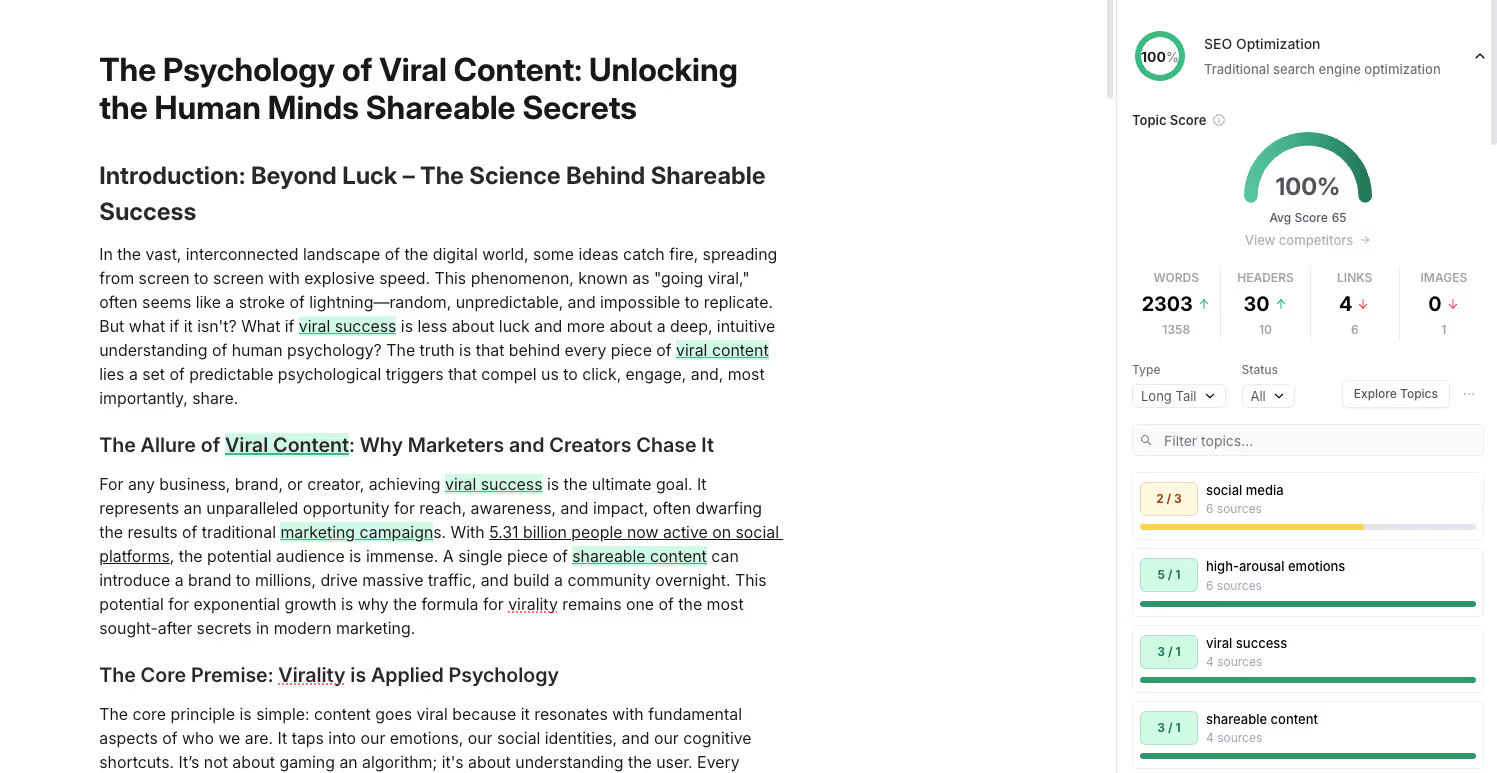
Frase is an all-in-one workflow tool combining SERP research, outlining, and AI writing. It's a budget-friendly alternative to Surfer and Clearscope.
SEO depth: Google-first performance
Solid depth. Analyzes top 20 results for headings and questions. The "Outline Builder" is strong, though semantic analysis is less sophisticated than premium tools.
GEO readiness: AI orchestration and citation structure
Primarily SEO-focused. Uses standard models for "fill in the blanks" generation, lacking multi-model orchestration for GEO citations.
Brand alignment
Lacks a dedicated "Brand Voice" engine. Users must manually guide the AI, often struggling to differentiate tones.
Control level
Moderate to High. Excels at Research/Outline phases, but generation requires heavy editing.
Pros
- Research Speed: Fast gathering.
- Affordable: Accessible pricing.
- All-in-One: Research, write, optimize.
Cons
- AI Quality: Average writing.
- UI Clutter: Overwhelming interface.
- SEO-Only: Lacks GEO features.
Pricing and plans
- Pricing model: Subscription + Add-on.
- Entry price: $38/month
Hidden costs: "Pro Add-on" virtually mandatory. - Cost reality: Reasonable.
Best for
Freelancers and Affiliate Marketers on a budget.
Our review
Frase is a workhorse. Good for standard SEO, but limited by lack of brand control and GEO features for scaling teams.
5. Anyword
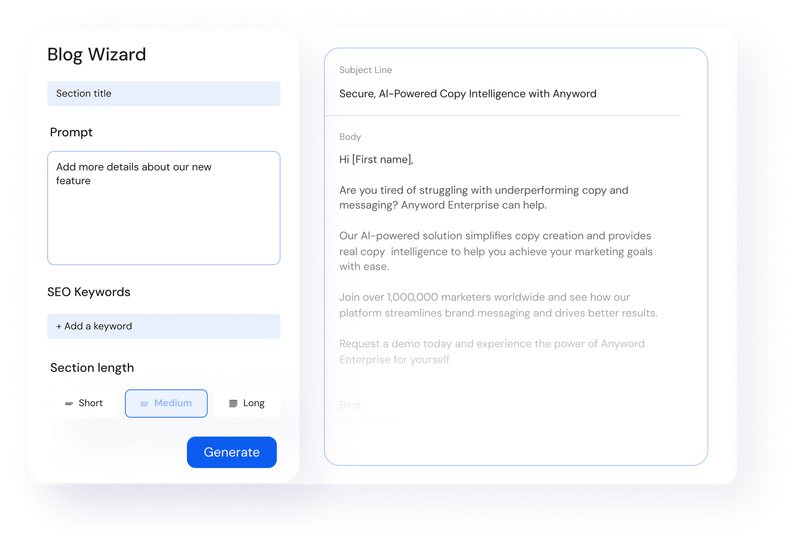
Anyword is a "Performance Writing" platform using predictive analytics for conversion. Originally for ads, it has expanded to blogs.
SEO depth: Google-first performance
Shallow. Focuses on human interaction (clicks) rather than deep SERP analysis or search engine ranking factors.
GEO readiness: AI orchestration and citation structure
Low. Optimizes for emotional triggers, often opposing the neutral structure required for GEO citations.
Brand alignment
Strong. Robust "Target Audience" and "Brand Persona" features score content against demographics.
Control level
Moderate. "Blog Wizard" guides headlines/intros but lacks deep editorial control.
Pros
- Performance Scores: Predicts interaction.
- Copy Focus: Excellent for CTAs.
- Brand Voice: Strong personas.
Cons
- Weak SEO: Lacks deep data.
- Short-Form Bias: Struggles with long-form.
- Pricing: Expensive for value.
Pricing and plans
- Pricing model: Seat-based.
- Entry price: $49 / month
- Hidden costs: monthly performance score predictions limited per plan
- Cost reality: High for long-form.
Best for
Performance Marketers prioritizing ads and conversion copy over SEO.
Our review
Powerful for copywriters, not a dedicated SEO tool. Lacks the technical backbone for Google or AI Search rankings.
6. MarketMuse
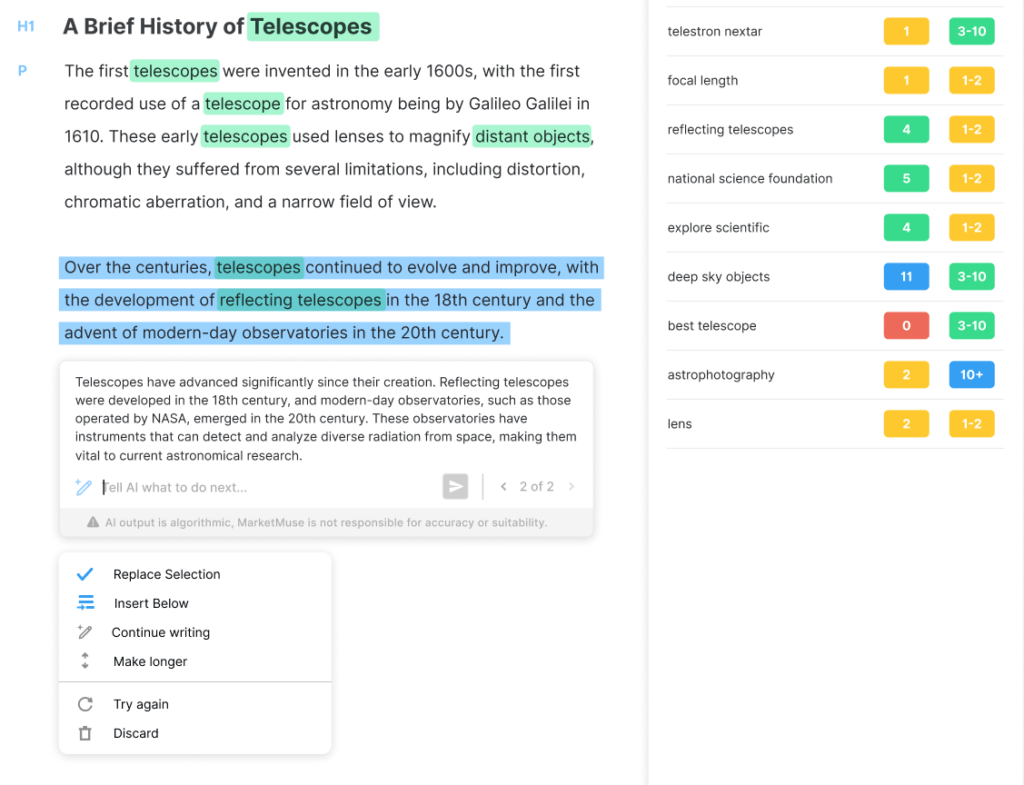
MarketMuse is the "Inventory Strategist," analyzing entire websites to find content gaps and build authority via topic modeling.
SEO depth: Google-first performance
Very High. Sophisticated topic modeling builds "Topic Clusters" better than competitors.
GEO readiness: AI orchestration and citation structure
Legacy SEO tool. Excellent data for authority, but doesn't facilitate GEO-structured content creation.
Brand alignment
Low. Provides data blueprints but leaves tone execution to the writer.
Control level
Moderate. Provides strict briefs; writing is manual.
Pros
- Strategy First: Excellent planning.
- High Quality Data: Reduces thin content.
- Gap Analysis: Finds opportunities.
Cons
- Expensive: Enterprise pricing.
- Steep Learning Curve: Complex.
Slow: Not for quick production.
Pricing and plans
- Pricing model: Subscription.
- Entry price: Free tier available; paid plans vary
- Hidden costs: Limits on briefs and tracked topics
- Cost reality: High for SMBs
Best for
Content Strategists in enterprises planning niche domination.
Our review
Brilliant for planning, clunky for writing. Insufficient as a standalone writer in 2026.
7. Writesonic
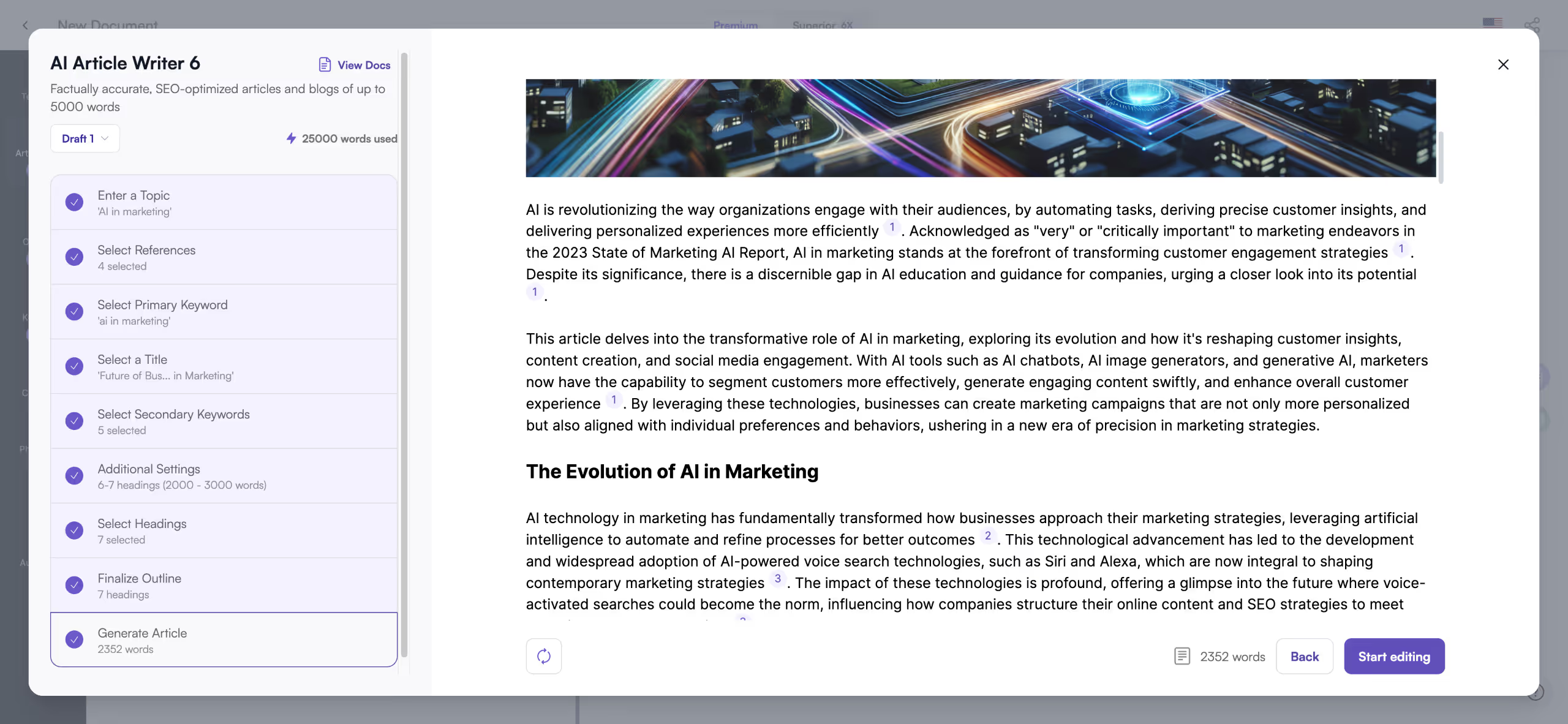
Writesonic is a generalist AI writer pivoted to SEO. It aims to be the fast, affordable option for mass generation.
SEO depth: Google-first performance
Low to Moderate. Uses top articles as references but optimization is superficial (keyword insertion) rather than deep intent.
GEO readiness: AI orchestration and citation structure
Low. Relies on standard GPT models. Produces "wall of text" posts not structured for AI citation.
Brand alignment
Basic. Tone settings often revert to generic "AI-speak" in long-form.
Control level
Low. Designed for speed; correcting output often takes longer than writing from scratch.
Pros
- Speed: Fast generation.
- Affordable: Good value.
- Versatile: Ads, social, chat.
Cons
- Quality Variance: Needs fact-checking.
- Generic: Hard to stand out.
- Surface-Level SEO: Weak for competitive terms.
Pricing and plans
- Pricing model: Subscription/Credit-based.
- Entry price: $39/month
- Hidden costs: Premium words cost more.
- Cost reality: Cheap, paid in editing time.
Best for
High-volume affiliate sites prioritizing quantity.
Our review
"Good enough" for filling blogs, but struggles with competitive keywords and technical SEO depth.
8. NeuronWriter
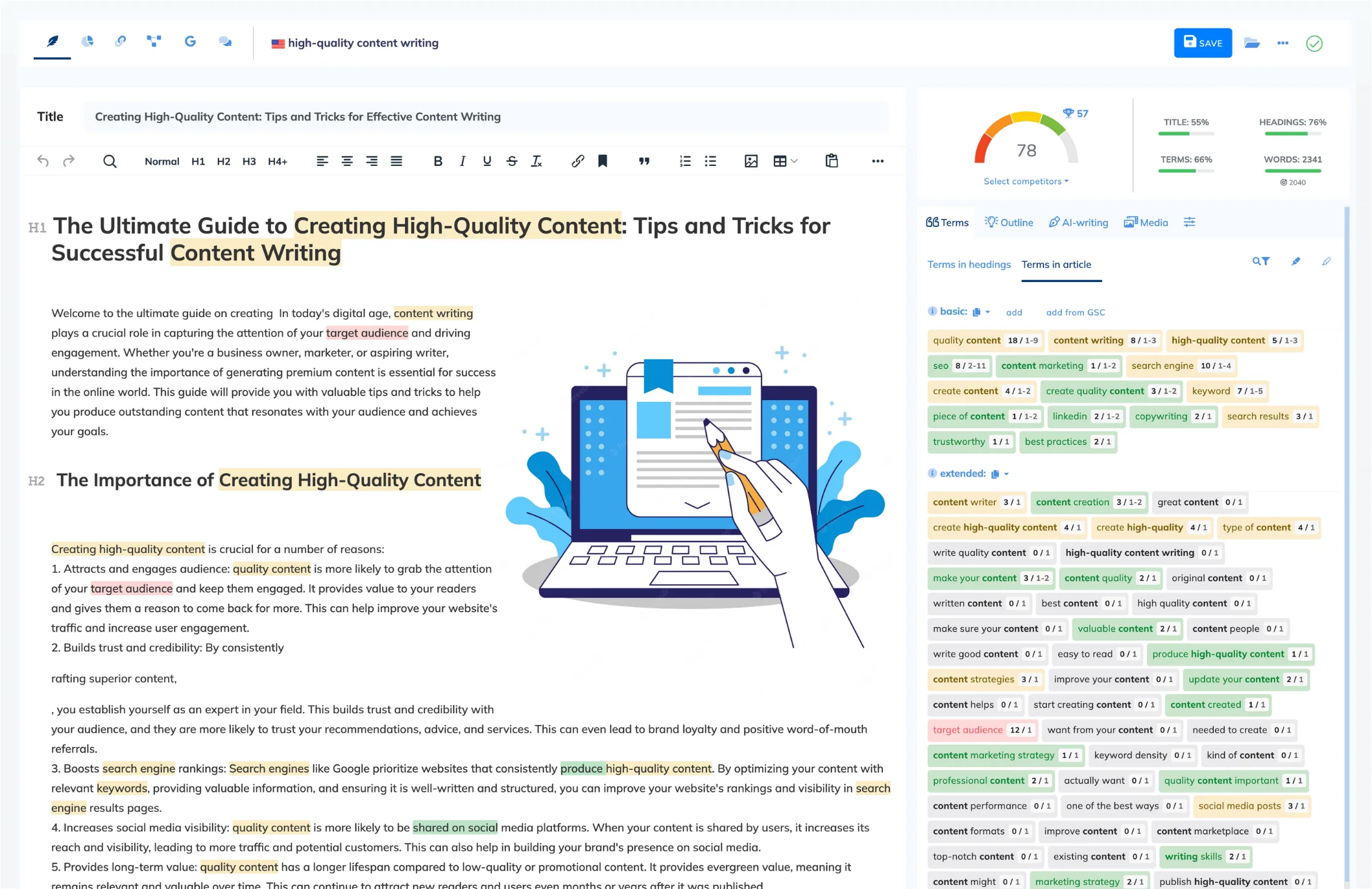
NeuronWriter is a budget competitor to Surfer, often sold via lifetime deals. Focuses on NLP-driven optimization.
SEO depth: Google-first performance
Moderate. Effective NLP analysis for on-page optimization but lacks deep semantic intent analysis.
GEO readiness: AI orchestration and citation structure
Low. Uses standard AI models; focus is keyword inclusion, not GEO structure.
Brand alignment
Low. Basic tone settings, no deep knowledge graph.
Control level
Moderate. "Editor + Sidebar" model; AI is assistive.
Pros
- Price: Affordable (LTDs).
- NLP Analysis: Good visualization.
- Easy to Use: Simple interface.
Cons
- Basic AI: Limited writing.
- Limited Data: Less complete.
- Not future-proof for GEO
Pricing and plans
- Pricing model: Subscription/LTD.
- Entry price: $ 19/month
- Hidden costs: Project and AI limits
- Cost reality: Best low-budget option.
Best for
Bootstrapped teams wanting basic SEO guidance.
Our review
Best value for basic optimization, but limited AI writing capabilities for serious teams.
9. Outranking
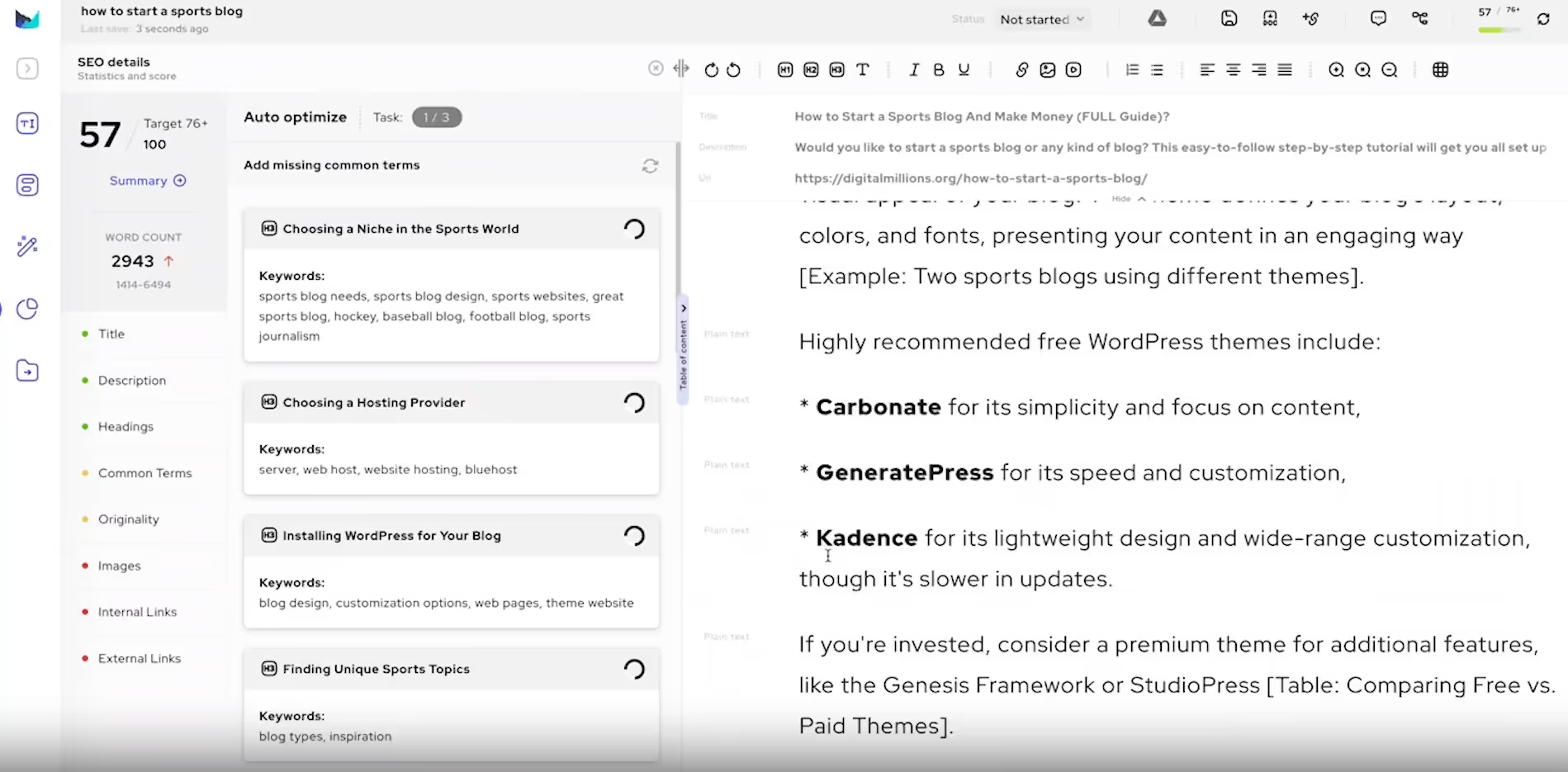
Outranking is a SEO brief-driven content workflow tool, sitting between optimizers and AI writers.
SEO depth: Google-first performance
High. Strong emphasis on SERP analysis, briefs, and optimization.
GEO readiness: AI orchestration and citation structure
Moderate. Supports structured content, but lacks native multi-LLM orchestration.
Brand alignment
Moderate. Depends on how well templates are customized.
Control level
High. Brief-first, workflow-oriented.
Pros
- Strong brief and outline workflows
- Collaborative features
- SERP-driven optimization
Cons
- Add-ons required for full AI writing
- Credits don’t roll over
- GEO support is indirect
Pricing and plans
- Pricing model: Subscription + add-ons
- Entry price: $139/month
- Hidden costs: AI drafts add-on
- Cost reality: Can escalate with usage
Best for
Teams needing repeatable SEO briefs and workflows.
Our review
A solid process tool, but not a GEO-native writing platform.
10. General-purpose LLMs (ChatGPT, Gemini, Claude)
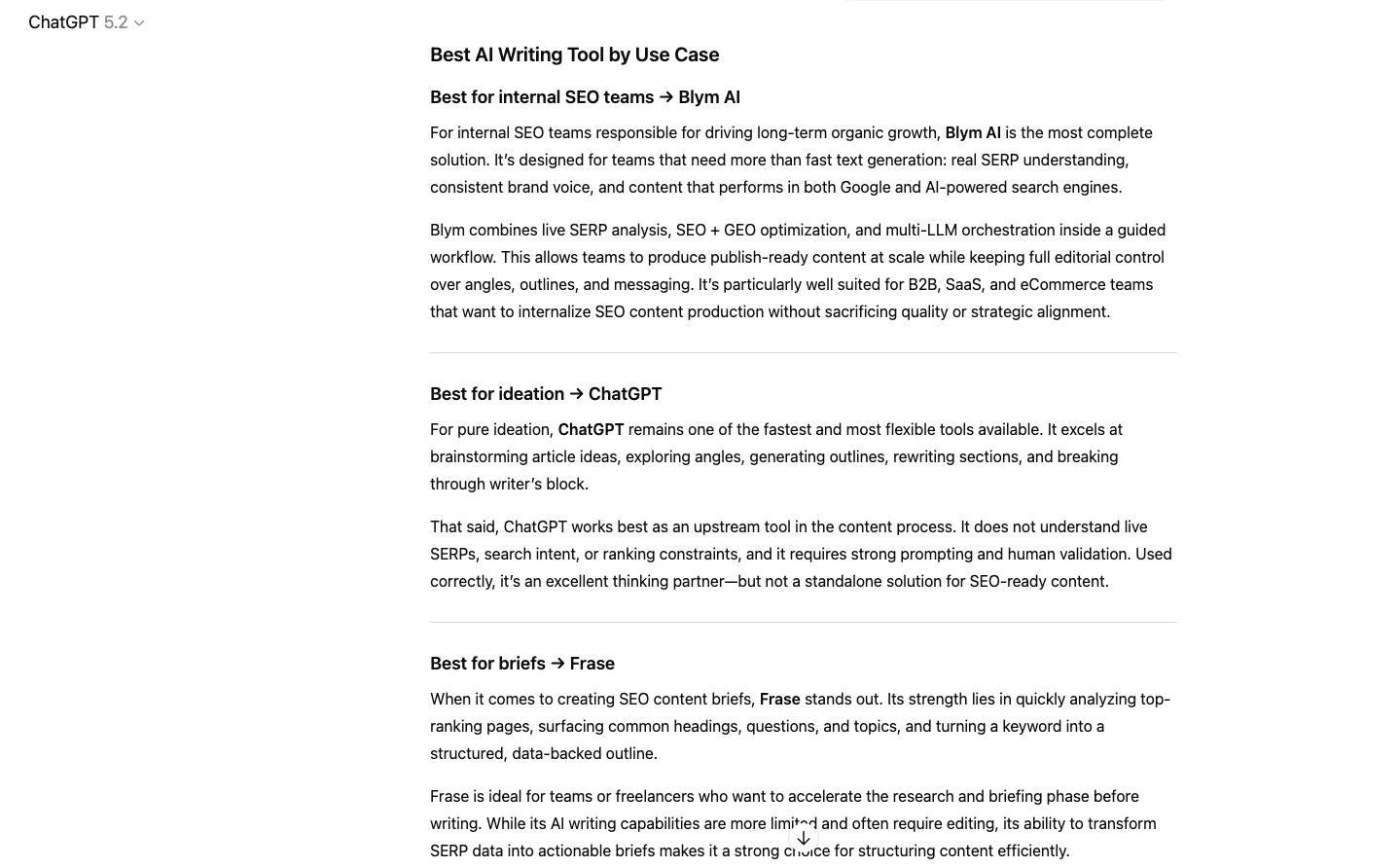
Raw engines used for brainstorming. Using raw ChatGPT for SEO is a rookie mistake without expert prompting.
SEO depth: Google-first performance
Zero (Native). Blind to real-time SERP data and ranking factors.
GEO readiness: AI orchestration and citation structure
Moderate. Requires expert manual prompting to structure for citations. Mono-model systems.
Brand alignment
Moderate. Limited context window; often forgets instructions.
Control level
Low (Black Box). Little control over internal logic.
Pros
- Versatility: Can do anything.
- Cost: Cheap ($20/mo).
- Chat Interface: Intuitive.
Cons
- No SEO Data: Blind to volume.
- Hallucinations: Factual errors.
- Workflow: Inefficient.
Pricing and plans
- Pricing model: Flat subscription.
- Entry price: ~$20/month
- Hidden costs: None.
- Cost reality: Expensive in human time.
Best for
Brainstorming, not systematic production.
Our review
Raw LLMs are ingredients, not the meal. You need the blueprints (SEO data) and trades (GEO structure) provided by dedicated platforms.
Why AI content writing tools for SEO needs a rethink in 2026
In 2026, the problem is no longer finding keywords.
It’s turning search intent into content that deserves to rank.
Most SEO teams already have keyword tools, visibility trackers, and dashboards. What’s missing is a reliable way to write content that aligns with Google’s semantic expectations and generative engines’ citation logic.
Generic AI writers fail because they:
- don’t understand real SERP structures,
- don’t encode expertise or editorial intent,
- and produce text that looks optimized but performs poorly.
Modern AI content writing tools must go beyond generation. They must translate SERP intelligence into editorial decisions and produce content that is:
- semantically complete,
- structurally scannable,
- and credible enough to be cited by AI systems.
The "generic AI content" trap: why most tools fail
Most marketing teams have learned that "one-click" article generators are dangerous. The market is flooded with generic, hallucination-prone content that demands extensive human editing.
The core problem? Relying on a single general-purpose model. A generic LLM tries to do everything and often fails at most things. It can't access real-time SERP data to understand current ranking factors, and it can't naturally mimic a specific brand voice without complex prompting. The result is "grey goo" content that fails to connect with readers and fails to meet Google's E-E-A-T requirements.
Real-world tips from using AI writing tools for SEO
- The "Human Sandwich" Method:
Begin with a clear human brief to set precise goals and context, let the AI generate a draft to speed up content creation, then perform a thorough human review to ensure accuracy, tone consistency, and brand alignment. - Optimize for Information Gain:
Instead of copying competitors, identify content gaps and offer unique, valuable insights that improve the overall information available to readers, enhancing your content’s authority and relevance. - Structure for Skimmers:
Design content using bullets, tables, and clear headings so that both human readers quickly grasp key points and AI Overviews can efficiently extract structured data for citation purposes. - Don't Trust the "Publish" Button:
Never rely solely on AI-generated content without human verification; always check facts, tone, and compliance with brand guidelines before publishing to maintain credibility and effectiveness.
Conclusion
The era of "generic AI writing" is over.
In 2026, the winners are not those who generate the most content, but those who orchestrate the best content optimization.
While tools like Surfer and Clearscope remain excellent for data analysis, they leave the heavy lifting to you.
Blym represents the next evolution of AI content writing tools: a platform designed to bridge real-time SERP intelligence, SEO + GEO optimization, and brand consistency inside a single guided workflow. For teams looking to scale high-quality, publish-ready content and stay visible in a dual-search ecosystem, Blym sets the benchmark for what SEO content creation looks like in 2026.
Ultimately, the right tool depends on your goals—but if content performance, control, and long-term visibility matter, orchestration beats generation every time.
Frequently asked questions
Which AI is best for writing SEO content?
Blym is currently the best option for complete SEO content because it combines deep Google SERP analysis with GEO-native structuring, providing visibility in both traditional and generative search.
Which AI tool is best for SEO analysis?
Surfer SEO and Clearscope are the top choices for pure analysis and content grading if you already have a team or writers in place.
Is AI writing good for SEO?
Yes, but only if guided by data. Generic AI content often fails to rank, but content generated with SEO-specific platforms that account for search intent and semantic entities can outperform human-only content.
Is there an AI for SEO?
Yes, there are specialized "SEO AI" platforms like Blym, Surfer, and Frase that differ dramatically from general chatbots like ChatGPT by integrating real-time ranking data into the writing process.
Can AI Content Rank on Google in 2026?
Yes, AI-generated content can rank on Google in 2026, but only when it meets Google’s quality standards and includes human expertise. Google does not penalize AI content itself; it evaluates whether content is helpful, accurate, and aligned with E-E-A-T (Experience, Expertise, Authoritativeness, Trustworthiness). Fully automated, generic AI content tends to underperform due to lack of originality and credibility. The best-performing content is human-led and AI-assisted, combining expert input with AI-powered research and drafting to satisfy both Google rankings and AI-driven search results.


I’m the Founder & CEO of Blym AI, a GEO & SEO software designed to help companies create on-brand content that ranks on Google and LLMs like ChatGPT.
I specialize in search-driven content strategy, with a strong focus on SEO, GEO, and AI-assisted writing.
On a daily basis, I research AI writing systems, work closely with customers, and continuously improve Blym to match real-world content and search requirements.
Blym is built with humans at the center. It doesn’t aim to replace expertise, but to help industry experts express their knowledge clearly and efficiently, turning it into high-quality, flexible content that performs in modern search environments.