.svg)
GEO vs SEO in 2026: the key differences and how to optimize for both

In 2026, search is fracturing into two realities: traditional SEO driving Google clicks and GEO shaping AI answers in ChatGPT, Perplexity, and Gemini. Most marketers still chase rankings, but 70% of buyers now consult LLMs first, often without ever clicking through.
The winners? Those optimizing for both traffic and influence.
This guide breaks down the 8 key differences so you don't get left behind.
Key takeaways about GEO vs SEO in 2026
- SEO is traffic-centric with success measured after clicks to your website, while GEO is influence-centric with value occurring when AI tools cite your brand, often without users ever visiting your site.
- Both SEO and GEO share foundations in user intent, high-quality content (EEAT), and building authority, but differ significantly in how they approach visibility, on-page signals, and technical requirements.
- GEO favors answer-first, highly structured content with comparison tables, numbered lists, and specific data points that AI can easily extract, unlike SEO's preference for comprehensive long-form content.
- Smart marketers don't choose between SEO and GEO but implement a hybrid approach, creating content that ranks on Google while being structured properly for AI citation.
Defining the core concepts of SEO and GEO
Before diving into the 8 key differences, let's define what each actually means:
- Search Engine Optimization (SEO) is how you get your website to show up when people search on Google or Bing. The goal is simple: rank high on search results so people click through to your site. SEO works on a clear ranking system where you fight for position #1, #2, or #3. You win by building better content, faster websites, and earning quality backlinks. The payoff comes after someone clicks and visits your website.
- Generative Engine Optimization (GEO) is the practice of getting your brand mentioned and cited by AI tools like ChatGPT, Perplexity, and Google's AI Overviews. Instead of competing for a spot on a results page, you're competing to be the answer the AI gives directly to users. GEO is about probability, not position. Success means your brand gets recommended as part of the AI's response, often without the user ever clicking to your site.
Core similarities between SEO and GEO strategies
Despite their different approaches, both strategies share the same DNA when it comes to content and authority.
1. User intent is still the starting point
Whether someone types into Google or asks ChatGPT a question, they want the same thing: a good answer to their problem. It all starts with understanding what a user is looking for. At the end, this is search. People are looking for something, you have the expertise to answer, you need to create content that will rank both on Google and LLM platforms.
The difference is delivery, not destination. If someone searches "best project management software," SEO tries to rank a comparison page, while GEO makes sure your tool gets mentioned in the AI's recommendation list. Same user need, different pathways to visibility.
Pro Tip: The line between "keywords" and "prompts" has blurred. Focus on answering the core question, regardless of how it's asked.
2. High-quality content - EEAT at the core of SEO and GEO
Google's E-E-A-T framework (Experience, Expertise, Authoritativeness, Trustworthiness) isn't just for search engines anymore. LLMs were trained on high-quality data and naturally prefer content that demonstrates clear expertise and accurate information. Generic, fluffy content fails in both arenas.
Google Search Central: "E-E-A-T remains critical for ranking and being a source LLMs trust. People-first content with clear expertise beats AI-generated spam every time."
This creates a huge opportunity for businesses that invest in authoritative, brand-specific content. Blym AI create high-quality, SEO and GEO optimized content in their brand voice, hitting the quality standards that both Google's algorithms and LLMs require for maximum visibility.
3. Building authority is a key factor
Authority drives both SEO rankings and AI citations, but the signals are shifting. While it remains more on brand and author citations than backlinks, authority is central. Authority is based on who is talking about you, where (YouTube, Reddit, LinkedIn, Instagram) and who you are (what is the link between your expertise and your topic).
LLMs build connections between your brand and topics based on how often they appear together across trusted sources. If your cybersecurity company gets mentioned regularly on LinkedIn posts, security forums, and industry publications, the AI learns to associate your brand with security expertise. This "semantic authority" becomes your competitive advantage.
GEO vs SEO: What's Different
While they share foundations, the tactics for each approach couldn't be more different.
1. Rankings vs. Citations: How Visibility Really Works
Here's the fundamental split: SEO is traffic-centric: the value is mostly measured after the click, on your website. You optimize to win a ranking position because you need people to leave Google and come to your site. Success metrics are clicks, time on page, and conversions.
GEO is influence-centric: the value often occurs before any click, when the AI shapes the user's short list and brand perception. When ChatGPT recommends your software as "one of the top 3 solutions," that recommendation acts like a pre-validated endorsement. The user might never click to your site but still choose your product based on the AI's suggestion.

Did You Know? A February 2025 study by Profound found only 12% overlap between Google's #1 results and ChatGPT citations. Ranking first on Google doesn't guarantee AI visibility.
2. On-Page Signals: What GEO Weights Differently
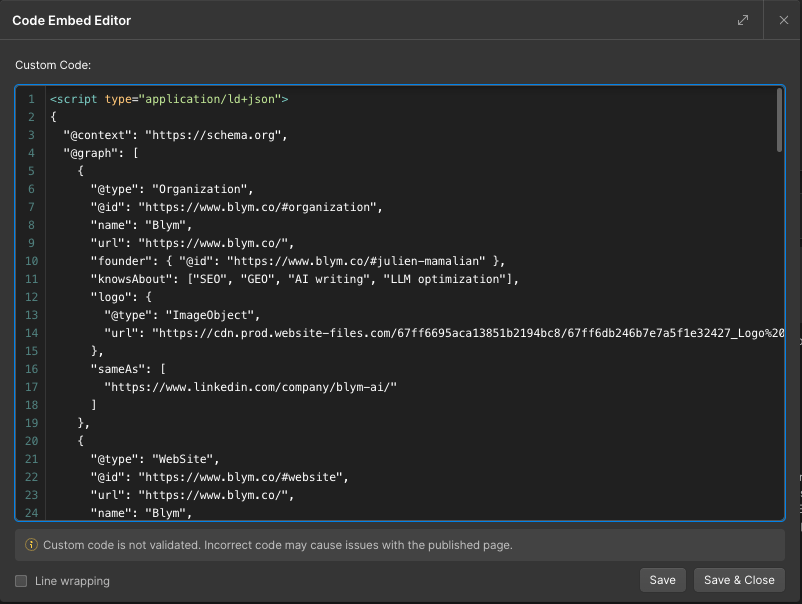
Traditional SEO optimizes for human readers who scan headlines and paragraphs. GEO focuses on format (lists, tables), schema (JSON-LD), sources. It also gives a lot of importance for meta description and URL slug to pick relevant sources.
Neil Patel: "GEO loves meta descriptions that answer the question directly—ChatGPT pulls them verbatim 33% more often."
For LLMs, this is really difficult to extract the content from a page without "noise," so they will be lazy and pick formats that are easy to parse. Think of it this way: an AI doesn't "read" your 2,000-word blog post. It scans for structured data it can quickly extract and reformat.
What GEO prefers:
- Comparison tables with clear rows and columns
- Numbered lists with specific data points
- FAQ sections with direct answers
- Schema markup that labels exactly what each piece of data represents
3. Off-Page Shifts: Backlinks vs. Brand Mentions
SEO relies heavily on backlinks as votes of confidence. Backlinks for SEO but brand mentions for GEO. LLMs don't understand link equity the same way Google does. Instead, they learn from co-occurrence patterns.
The two can work together but this is highly critical for LLM to regularly see your brand associated in different sources with the same words. If your brand appears alongside "cloud storage" across news articles, Reddit discussions, and industry reports, the AI builds that semantic connection. This creates citation probability without requiring a single backlink.
What I Learned: I posted on Reddit threads for a client: we got zero "real" backlinks, but 17 ChatGPT mentions in 30 days. Make sure to favor brand mentions to rank in LLMs.
4. Content Formats: Long-Form vs. AI-Friendly Structures
SEO favors topic clusters, long-form pages, and classic "content is king" structures optimized around keywords and internal links. The goal is comprehensive coverage that keeps users engaged and signals topical authority to Google.
GEO favors answer-first, highly structured, comparison-heavy content (listicles, tables, specific numbers) that LLMs can easily quote and reuse. AI engines are efficiency-focused. They want the key information upfront in a format they can immediately understand and cite.
Example comparison:
- SEO format: "The Complete Guide to Email Marketing" (narrative storytelling, 3,000 words)
- GEO format: "Email Marketing ROI: 5 Key Benchmarks" (structured list, specific metrics, scannable)
As a case study, I rewrote an article from our Bloggle website: "SEO Guide" as "8 SEO tips for Shopify" with a comparison table. The citation in AI increased by 30% for this blog post.
5. Technical Crawlability: SEO Forgives, GEO Rejects
Google's crawlers are sophisticated and patient. They can render JavaScript and wait for slow-loading pages. LLMs will reject JS heavy websites, websites that does not load fast and when size is too big. They don't have the crawl and wait capacity of Google.
Many AI browsing tools operate with strict timeouts. If your content takes 5 seconds to load or is buried behind client-side rendering, the LLM skips to a faster competitor. Static HTML with clean text-to-code ratios becomes essential for GEO success.
Summary comparison: SEO vs GEO at a glance
Verdict: should you prioritize GEO or SEO?
It is important to address both. The question itself assumes you have to choose, but successful 2026 marketing requires a hybrid approach.
Ignore SEO and you miss massive traffic volumes from traditional search. Ignore GEO and you become invisible in AI-assisted discovery. Remember that 12% overlap statistic: being #1 on Google doesn't guarantee ChatGPT will cite you.
Smart marketers create content that serves both masters. Note that Blym's content workflow addresses both SEO ranking and AI citation optimization needs, producing content rich enough for human readers while structured enough for AI extraction.
The winning strategy? Build content that ranks on Google today and gets cited by AI tomorrow.
Conclusion: adapting to the future of digital marketing
The days of algorithm optimization are ending. The future belongs to brands that create content for both human search and AI generation, ensuring visibility across every touchpoint where customers seek answers.
Frequently asked questions about GEO vs SEO
Is GEO replacing SEO?
The truth is we don't know. But there is a better chance it is a merge of both that will happen in the future. Rather than replacement, we're seeing traditional search engines integrate AI features (like Google's AI Overviews), making GEO a necessary component of modern SEO strategy.
What are the key differences between SEO and GEO?
SEO focuses on ranking web pages to drive traffic, prioritizing keywords and backlinks. GEO focuses on getting content cited in AI responses, prioritizing structured data, direct answers, and brand mentions across diverse sources.
What is AI SEO or GEO?
AI SEO typically means using AI tools to improve your SEO workflow. GEO (Generative Engine Optimization) is the practice of optimizing content specifically for AI engines like ChatGPT and Perplexity to increase citation probability.
What does GEO mean in SEO?
GEO stands for Generative Engine Optimization. It's the shift from optimizing for a list of blue links to optimizing for the direct answer an AI provides, requiring focus on facts, structured data, and authoritative sources rather than just keywords.


I’m the Founder & CEO of Blym AI, a GEO & SEO software designed to help companies create on-brand content that ranks on Google and LLMs like ChatGPT.
I specialize in search-driven content strategy, with a strong focus on SEO, GEO, and AI-assisted writing.
On a daily basis, I research AI writing systems, work closely with customers, and continuously improve Blym to match real-world content and search requirements.
Blym is built with humans at the center. It doesn’t aim to replace expertise, but to help industry experts express their knowledge clearly and efficiently, turning it into high-quality, flexible content that performs in modern search environments.