.svg)
10 best generative engine optimization (GEO) tools to get cited by AI engines
%20tools%20to%20get%20cited%20by%20AI%20engines.avif)
By 2026, Gartner predicts a 25% decline in traditional search engine traffic as users shift toward generative AI solutions like ChatGPT, Claude, and Google's AI Overviews. This seismic shift has created a new discipline: Generative Engine Optimization (GEO). Unlike traditional SEO, which fights for a link on a results page, GEO fights for the "single source of truth" citation within an AI's direct answer.
To survive this transition, marketing teams cannot rely solely on legacy SEO software or generic AI writers. You need specialized tools designed to measure brand visibility in Large Language Models (LLMs) and create content structured for AI retrieval.
In this guide, we analyze the 10 best generative engine optimization (GEO) tools available today, ranging from enterprise monitoring platforms to our own solution, Blym, which we built to bridge the gap between search ranking and AI citation.
Benchmark of the best GEO tools by use case
Key takeaways: Finding best generative engine optimization (GEO) tools for your team
- GEO tools fall into two categories: monitoring platforms that track AI citations and creation platforms that build content beyond prompts structured for AI retrieval.
- Most AI writing tools miss the GEO mark because they focus on speed over citability—true GEO requires analyzing why AI engines cite specific sources and replicating those authority signals.
- For content teams needing publish-ready articles, choose creation platforms like Blym; for enterprise monitoring, select dedicated tracking tools like Profound or Otterly.AI.
- Avoid confusing prompt-based generation with optimization—a tool using GPT-5 doesn't make it GEO-capable unless it analyzes live SERPs and structures data for AI retrieval patterns.
What is a generative engine optimization (GEO) tool?
A Generative Engine Optimization (GEO) tool is a software platform designed to help brands analyze, monitor, and improve their visibility within generative AI responses (such as ChatGPT, Perplexity, and Google AI Overviews). While traditional SEO tools focus on keywords and backlinks to rank blue links, optimization tools focus on "citability", ensuring your content is selected, understood, and referenced by AI models as a credible source.
These tools typically fall into two categories: monitoring platforms that track how frequently and positively your brand is mentioned by AI, and creation platforms that design content specifically optimized for retrieval by large language models (LLMs).
At Blym, we recognized early on that existing tools were insufficient for this new reality. We spent 12 months conducting intensive AI research to engineer a platform specifically designed for GEO. Unlike standard AI writers that simply generate text from prompts, a true GEO tool must analyze the "retrieval logic" of engines, understanding why an AI cites one source over another, and help you replicate those authority signals.
To help you find the right fit for your team, we have compared the top tools based on their primary role in a GEO strategy.
Quick recommendations:
- Best for content creation: Blym AI (for teams needing publish-ready, cited content).
- Best for enterprise monitoring: Profound (for deep analytics across all models).
- Best for quick diagnostics: HubSpot AI Search Grader (for a free initial check).
Why most "AI writing tools" miss the GEO mark
There is a critical distinction between an "AI writing tool" and a "GEO tool." Most AI writers (like Jasper or basic ChatGPT wrappers) focus on speed and volume. They generate text based on prompts, often resulting in generic, hallucinated, or unoptimized content that fails to trigger citations in other AI models.
GEO requires precision, not just generation. To get cited, content must demonstrate high E-E-A-T (Experience, Expertise, Authoritativeness, and Trustworthiness) and follow specific structural formats that LLMs prefer (definitions, lists, data tables).
This is where Blym differs fundamentally from generic tools. We do not just "write" content; we engineer it. Our approach combines deep SEO analysis, scanning live SERPs to understand what Google rewards, with strict brand voice preservation. By orchestrating multiple AI models, we deliver output that is not only factually accurate and optimized for search rankings but also structured to be the most logical citation for AI answers. While generic tools require heavy human editing to be usable, Blym delivers content that is ready to publish and primed for visibility.
SEO content tools help you rank better pages. Blym helps you create pages that AI engines can confidently cite.
Ready to go deeper? Our complete guide “Writing Content that Ranks in AI” covers AI retrieval patterns, content structuring for citability, and how to keep your brand voice intact. Perfect whether you're starting with GEO or leveling up your strategy.
What Makes a GEO Tool Competitive in 2026?
To assess these tools fairly and technically, we evaluated them using criteria aligned with the 2026 GEO landscape, focusing on their real effectiveness within a GEO workflow beyond marketing claims.
Our evaluation framework included:
- Citability analysis: Does the tool help you understand why a source is cited?
- LLM coverage: Does it track visibility across multiple engines (ChatGPT, Perplexity, Claude) or just Google?
- Actionability: Does it provide data you can act on, or just vanity metrics?
- Integration of SEO & GEO: Does it acknowledge that traditional search and AI answers are currently intertwined?
GEO visibility tracking & monitoring tools
These tools are designed to measure how brands and content appear, are selected, and cited by generative engines. They are the "analytics" stack of the GEO world, indispensable for measuring your position but insufficient for creating the content that gets you there.
Profound
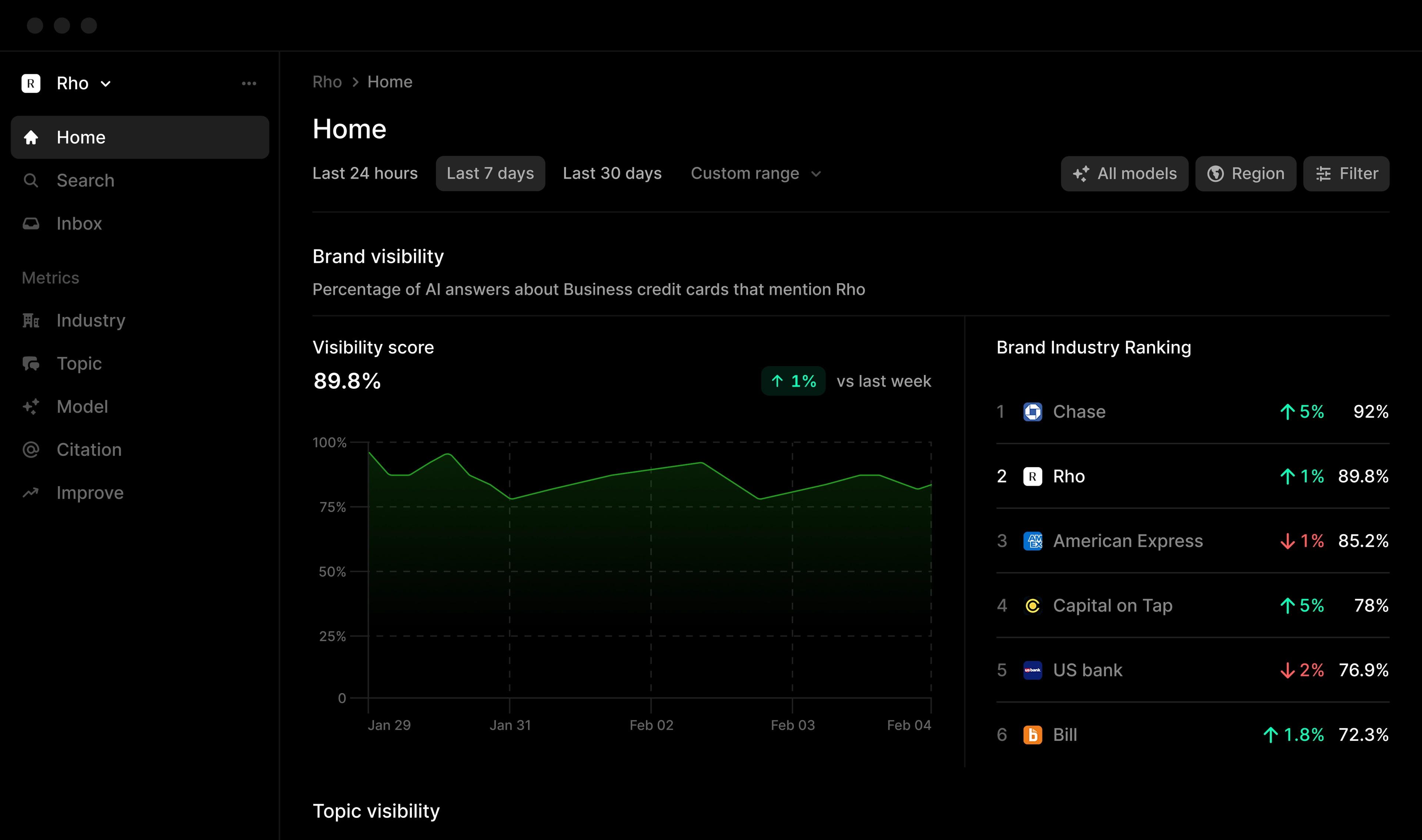
Profound is widely recognized as a market leader for enterprise-grade AI visibility. It focuses heavily on helping large organizations understand their "Share of Model" across various LLMs.
Category / GEO role: AI Visibility Tool Primary GEO use case: Enterprise Monitoring & Reputation Management What the tool does well (GEO strengths):
- Provides granular data on how different LLMs (ChatGPT, Gemini, Perplexity) perceive your brand.
- Tracks sentiment analysis within AI responses, not just mentions.
- Offers "Share of Model" metrics similar to Share of Voice in traditional SEO.
- GEO limitations: It is primarily a monitoring solution; it does not help you create the content to fix the issues it identifies.
- Best fit for (audience): Enterprise SEO Leads and Brand Managers.
- GEO-native or GEO-adapted: GEO-Native.
- AI / LLM coverage: Multi-LLM (ChatGPT, Gemini, Perplexity, Claude, Bing). Human-in-the-loop: Low (Automated reporting).
- Content vs visibility focus: Visibility Focus.
- Pricing: Starts at $82,50/month
AthenaHQ
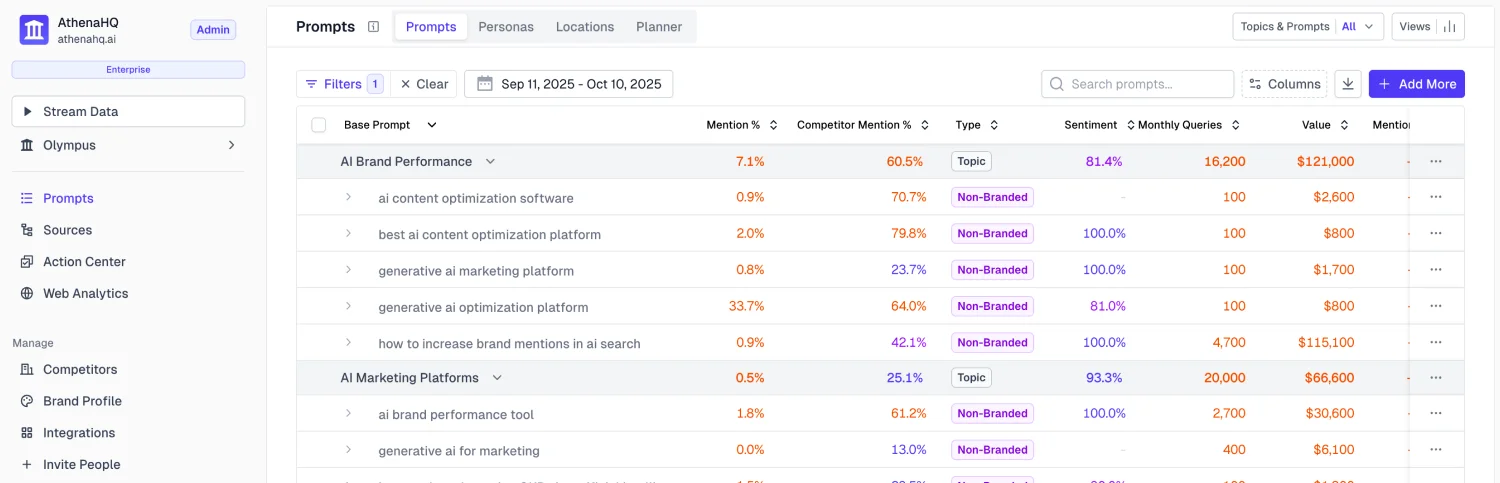
AthenaHQ positions itself as a unified search and chat optimization platform, helping brands verify their data is correctly represented when users ask questions via agents or chat interfaces.
Category / GEO role: AI Visibility Tool Primary GEO use case: Agent Optimization & Knowledge Graph Management What the tool does well (GEO strengths):
- Focuses on how autonomous agents retrieve brand information.
- Helps structure corporate data so it is machine-readable.
- GEO limitations: Less focused on editorial content strategy; more technical data alignment.
- Best fit for (audience): Technical SEOs and Data Managers.
- GEO-native or GEO-adapted: GEO-Native.
- AI / LLM coverage: Unified Search & Chat environments.
- Human-in-the-loop: Medium.
- Content vs visibility focus: Visibility Focus.
- Pricing: starts at $245/month
Peec.ai
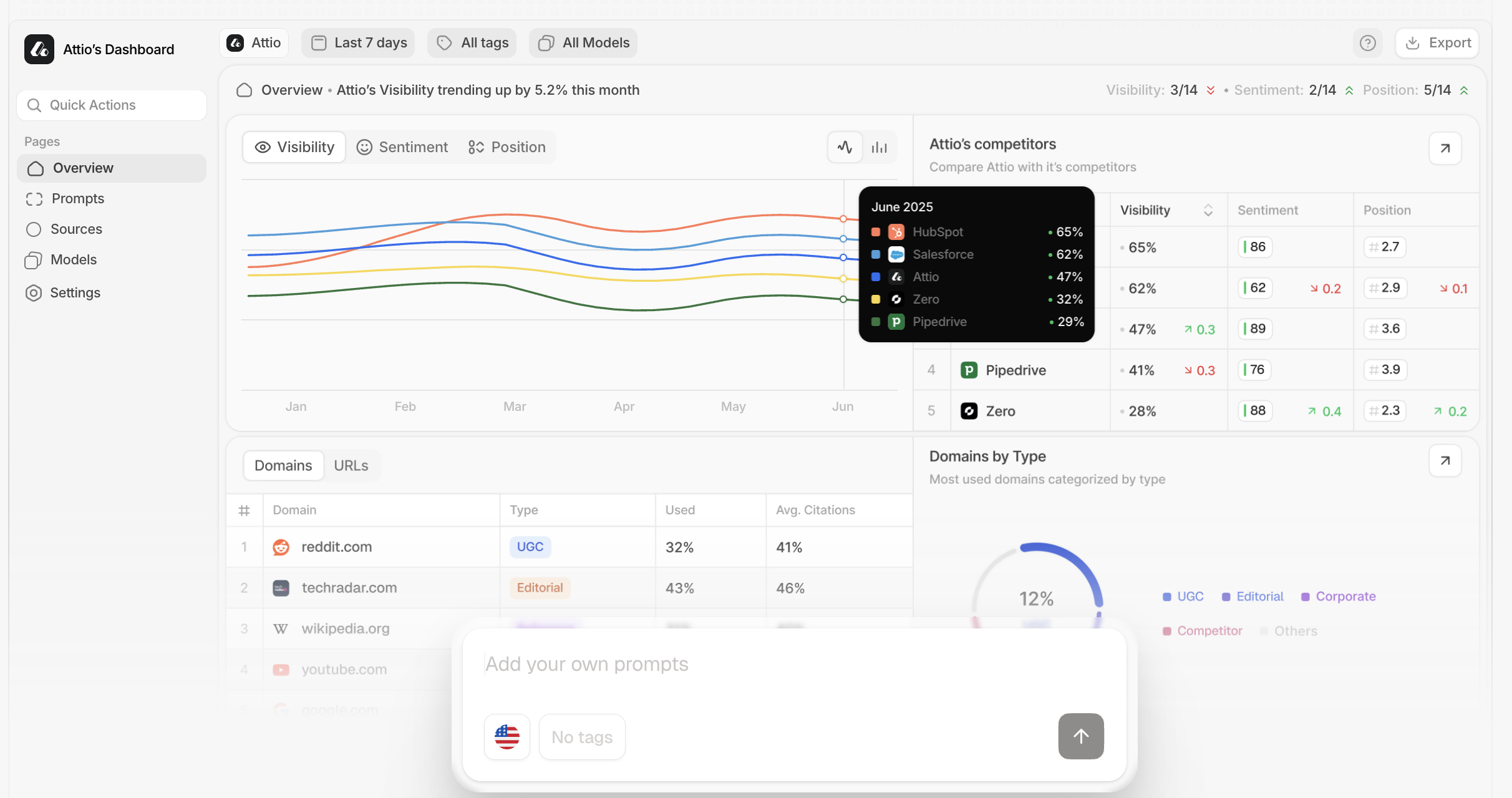
Peec.ai is a dedicated solution for tracking brand visibility specifically within generative answers, offering a straightforward dashboard for tracking citations.
Category / GEO role: AI Visibility Tool Primary GEO use case: Brand Visibility & Citation Tracking What the tool does well (GEO strengths):
- Simple interface to see where and how your brand is cited.
- Good for tracking specific queries across Perplexity and ChatGPT.
- GEO limitations: Limited depth in terms of strategic content recommendations compared to enterprise suites.
- Best fit for (audience): Marketing Managers and Mid-market businesses.
- GEO-native or GEO-adapted: GEO-Native.
- AI / LLM coverage: Perplexity, ChatGPT, Claude.
- Human-in-the-loop: Low. Content vs visibility focus: Visibility Focus.
- Pricing: Freemium available; starts at $88/month.
Otterly.AI
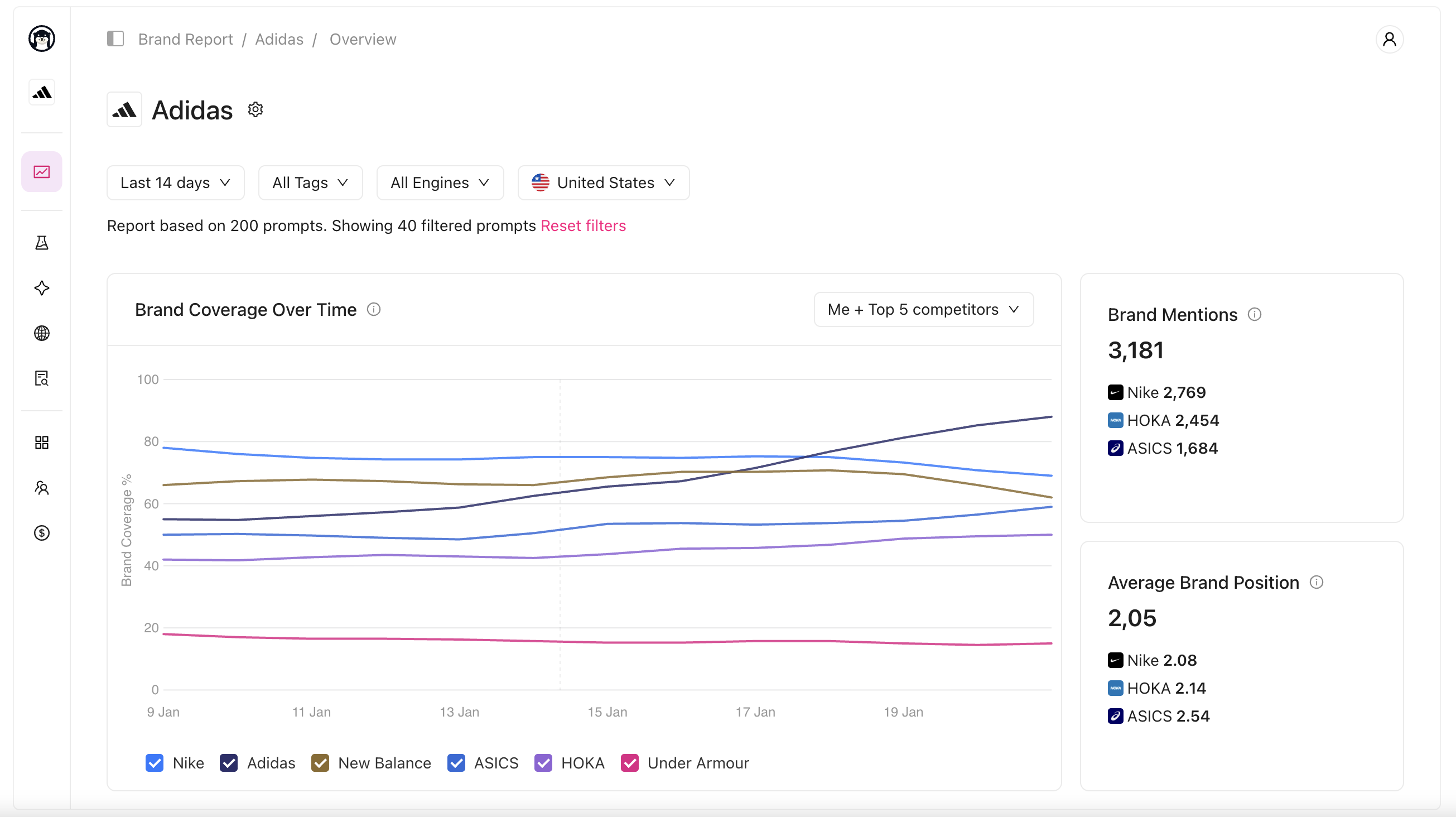
Otterly.AI is an accessible monitoring tool that allows brands to track their presence in AI conversations, making GEO metrics accessible to smaller teams.
Category / GEO role: AI Visibility Tool Primary GEO use case: Monitoring & Sentiment Tracking What the tool does well (GEO strengths):
- Monitors brand mentions in real-time across major chatbots.
- Provides sentiment analysis (positive, neutral, negative) for AI answers.
- GEO limitations: Lacks deep competitor benchmarking features found in high-end tools.
- Best fit for (audience): SMBs and Growth Teams.
- GEO-native or GEO-adapted: GEO-Native.
- AI / LLM coverage: ChatGPT, Claude, Gemini.
- Human-in-the-loop: Low.
- Content vs visibility focus: Visibility Focus.
- Pricing: starts at $25/month.
GetMint.ai
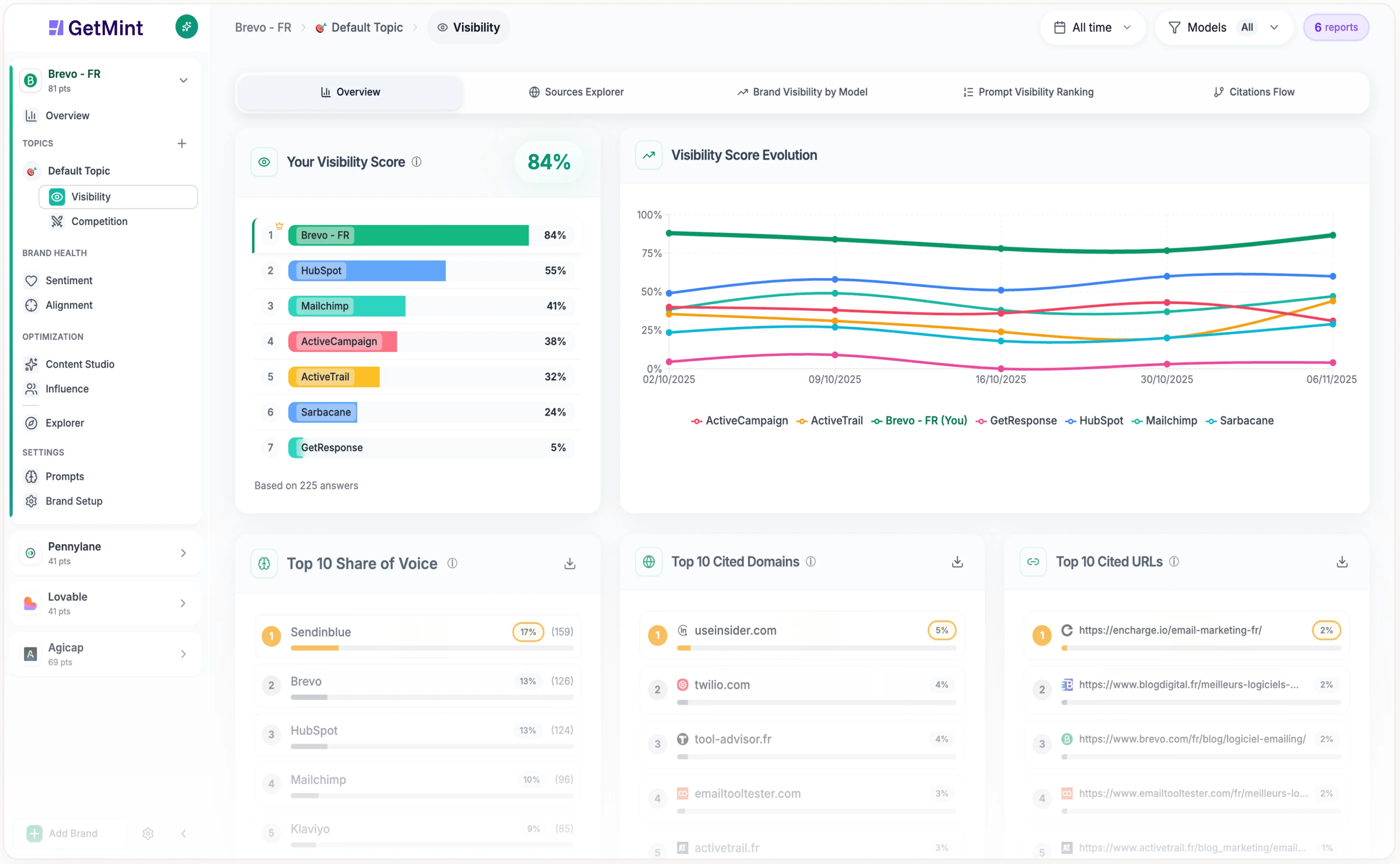
GetMint.ai focuses on the concept of "optimization" for LLMs, providing insights into how to influence the output of generative models.
Category / GEO role: AI Visibility Tool Primary GEO use case: Citability Tracking & Influence What the tool does well (GEO strengths):
- Identifies gaps where competitors are cited, and you are not.
- Provides actionable insights on how to structure data for better retrieval.
- GEO limitations: Still evolving; the link between insight and content execution requires external resources.
- Best fit for (audience): SEO Strategists.
- GEO-native or GEO-adapted: GEO-Native.
- AI / LLM coverage: Major LLMs.
- Human-in-the-loop: Medium.
- Content vs visibility focus: Visibility Focus.
- Pricing: starts at $93/month.
Search-driven GEO writing platforms
This category represents tools designed to create content optimized for both search engines and generative engines, based on real SERP and AI analysis. The distinction matters: these platforms analyze actual search results and AI retrieval patterns, then structure content for citability, not just generation speed. They prioritize expertise and human control over pure automation.
Blym AI
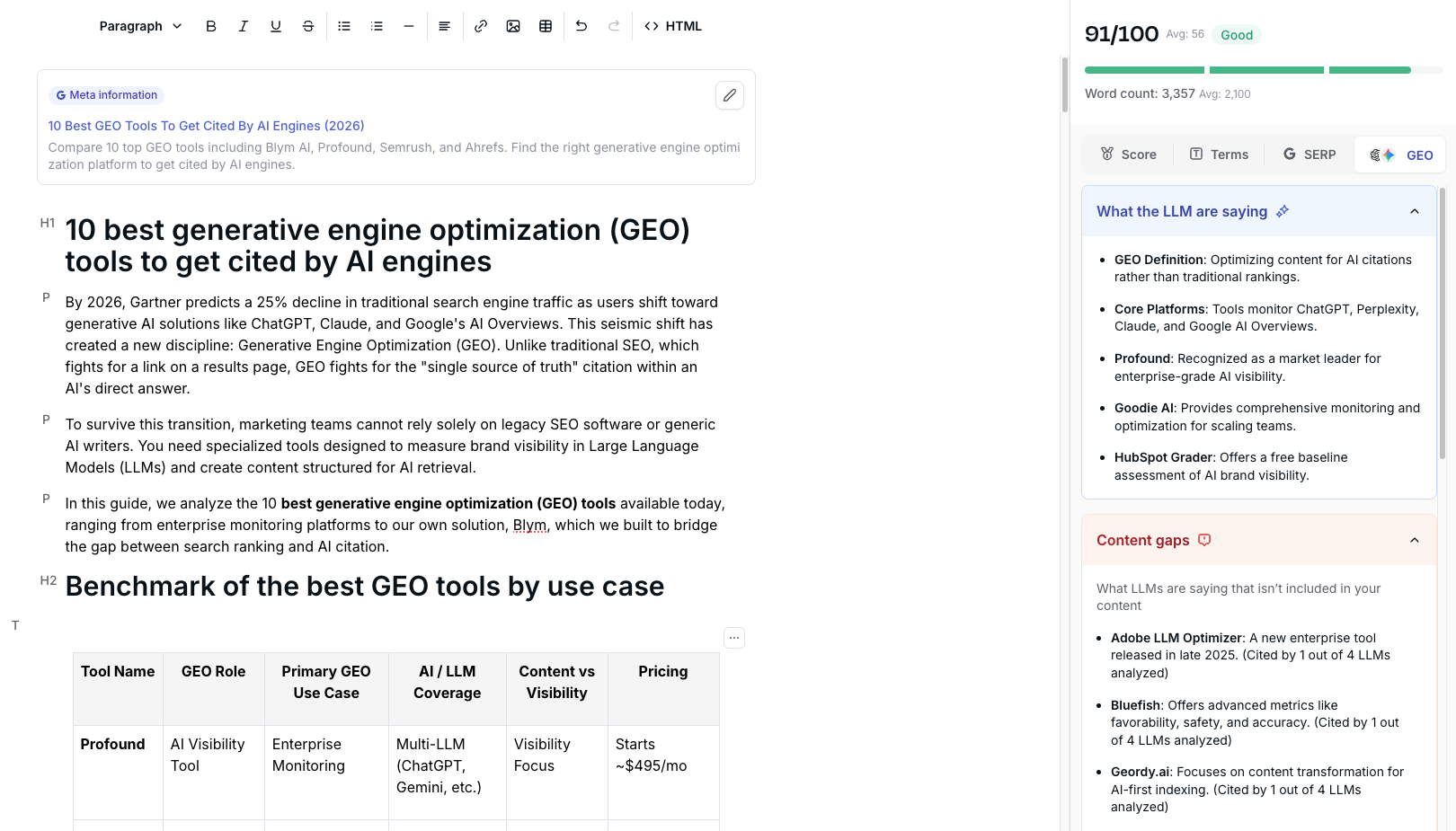
Blym AI is the first platform specifically engineered to bridge the gap between high-ranking SEO content and AI citability. While monitoring tools tell you if you are visible, Blym helps you build the assets required to become visible.
Category / GEO role: GEO-Native Platform Primary GEO use case: Content Creation, Optimization & AI Citability
What the tool does well (GEO strengths):
- Proprietary AI engine: Blym orchestrates multiple world-class models (including Claude and GPT-4) to analyze live SERP data and structure content specifically for AI retrieval (lists, definitions, direct answers).
- Brand voice preservation: Unlike generic tools, Blym learns your specific tone and style, delivering content that builds the brand authority necessary for AI trust.
- Publish-ready output: Delivers fully formatted, optimized content that requires minimal editing, solving the "AI fatigue" problem that plagues content teams.
- GEO limitations: Blym focuses on the creation and optimization phase rather than pure reputation monitoring across chatbots.
- Best fit for (audience): Content Teams, SaaS Companies, and Agencies.
- GEO-native or GEO-adapted: GEO-Native.
- AI / LLM coverage: Google Search, AI Overviews, and retrieval logic for major LLMs.
- Human-in-the-loop: High (Strategic control over outline and voice).
- Content vs visibility focus: Content & Optimization Focus.
- Pricing: starts at $119/month.
What makes Blym different from tools like Surfer, Frase, or Writesonic? Those platforms optimize for SEO metrics or generate content quickly, but they were not built with GEO's retrieval logic in mind. Blym was designed from day one to understand why AI cites one source over another, then apply that understanding to every piece of content. The result is content that works for Google rankings and gets selected by AI engines as the authoritative answer.
SEO content tools adapted to GEO
These are SEO-first tools that can support GEO strategies but were not designed specifically for generative engines. They are useful for structure and traditional SEO foundations, but have clear limitations when it comes to AI citations, multi-LLM tracking, and AI answer optimization.
SurferSEO
SurferSEO focuses on content optimization through SERP analysis and on-page recommendations.
Category / GEO role: SEO Content Tool
Primary GEO use case: On-Page Optimization & Content Structure
What the tool does well:
- Strong correlation-based analysis for traditional Google ranking factors.
- Clear content scoring system for SEO optimization.
- GEO limitations: Built for traditional SERP ranking, not AI citation patterns or LLM retrieval logic.
- Best fit for (audience): SEO-focused Content Teams.
- Pricing: starts at $79/month
Frase
Frase combines content research with AI writing assistance, helping teams create SEO-optimized content faster.
Category / GEO role: SEO Content Tool
Primary GEO use case: Content Research & Brief Generation
What the tool does well:
- Quick content research and competitor analysis.
- AI-assisted drafting for SEO content.
- GEO limitations: Generation-focused rather than optimization-focused; lacks specific GEO citability features.
- Best fit for (audience): Content Marketers and Freelance Writers.
- Pricing: starts at $38/month
Clearscope
Clearscope provides content optimization recommendations based on top-performing content analysis.
Category / GEO role: SEO Content Tool
Primary GEO use case: Content Optimization & Grading
What the tool does well:
- Clear, actionable content grades based on keyword coverage.
- Simple interface for content teams.
- GEO limitations: Focused on keyword optimization rather than the structural patterns AI engines prefer for citation.
- Best fit for (audience): In-house Content Teams.
- Pricing: starts at $129/month
MarketMuse
MarketMuse uses AI to analyze content gaps and provide topic modeling for content strategy.
Category / GEO role: SEO Content Tool
Primary GEO use case: Topic Modeling & Content Strategy
What the tool does well:
- Deep topic analysis for building topical authority.
- Content inventory management.
- GEO limitations: Strategic planning tool, not a GEO-native creation or monitoring platform.
- Best fit for (audience): Content Strategists and Editorial Teams.
- Pricing: starts at $119/month
SEO tools adapted to GEO
These established SEO platforms provide foundational data that supports GEO strategies, but they were not built specifically for generative engine visibility.
Semrush AI SEO Toolkit
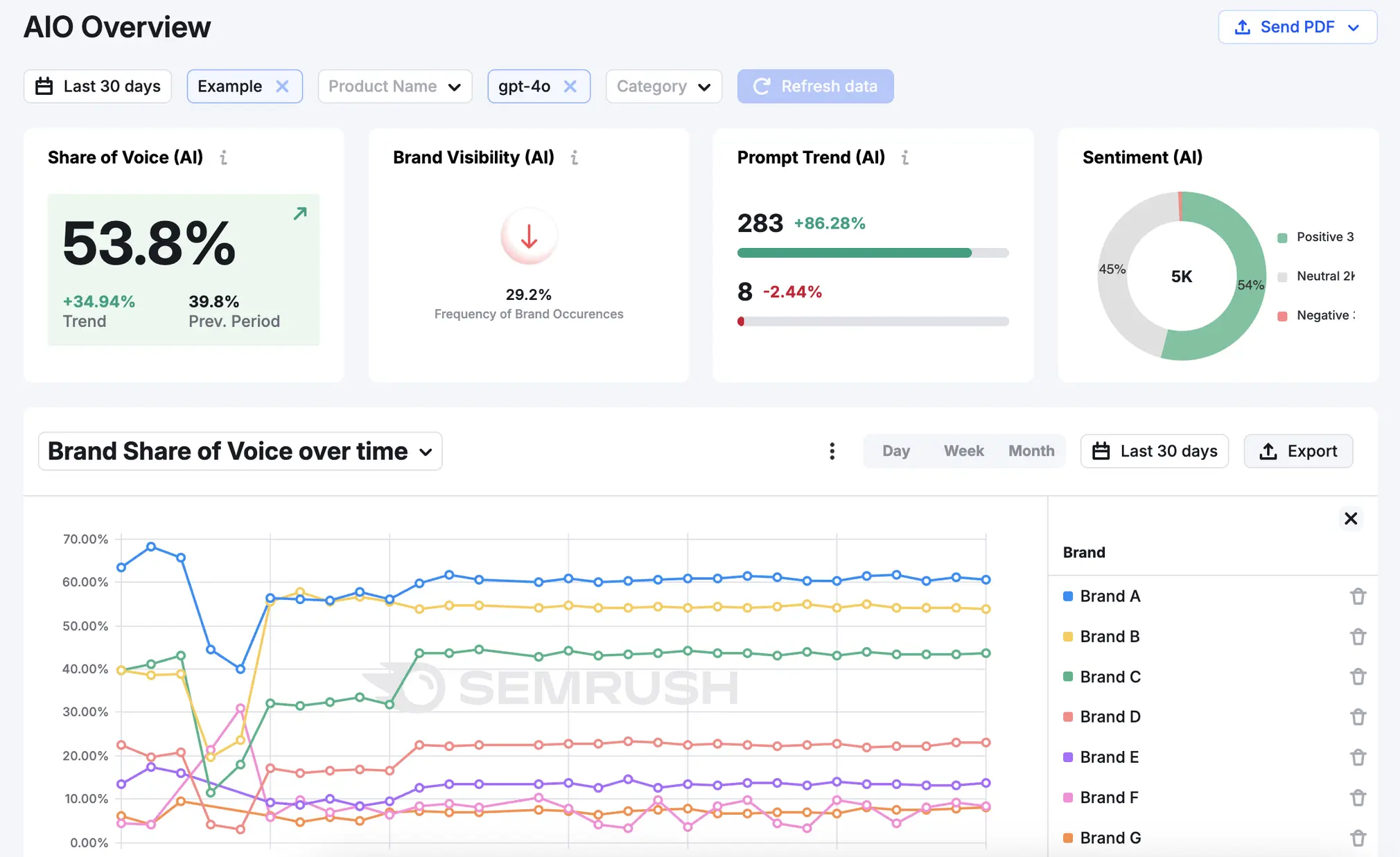
Semrush is a powerhouse in traditional SEO that has integrated AI features to assist with content generation and optimization.
Category / GEO role: SEO Tool Adapted to GEO
Primary GEO use case: Keyword Research & Data Support
What the tool does well (GEO strengths):
- Massive database of keyword and backlink data which remains a ranking signal for Google's AI Overviews.
- "Copilot" features help speed up traditional SEO workflows.
- GEO limitations: Primarily focused on Google's traditional algorithms; lacks specific metrics for ChatGPT or Claude visibility.
- Best fit for (audience): Full-stack SEO Professionals.
- GEO-native or GEO-adapted: GEO-Adapted.
- AI / LLM coverage: Primarily Google Search.
- Human-in-the-loop: High. Content vs visibility focus: Content & Visibility.
- Pricing: Starts $99/month for AI visibility toolkit.
Ahrefs
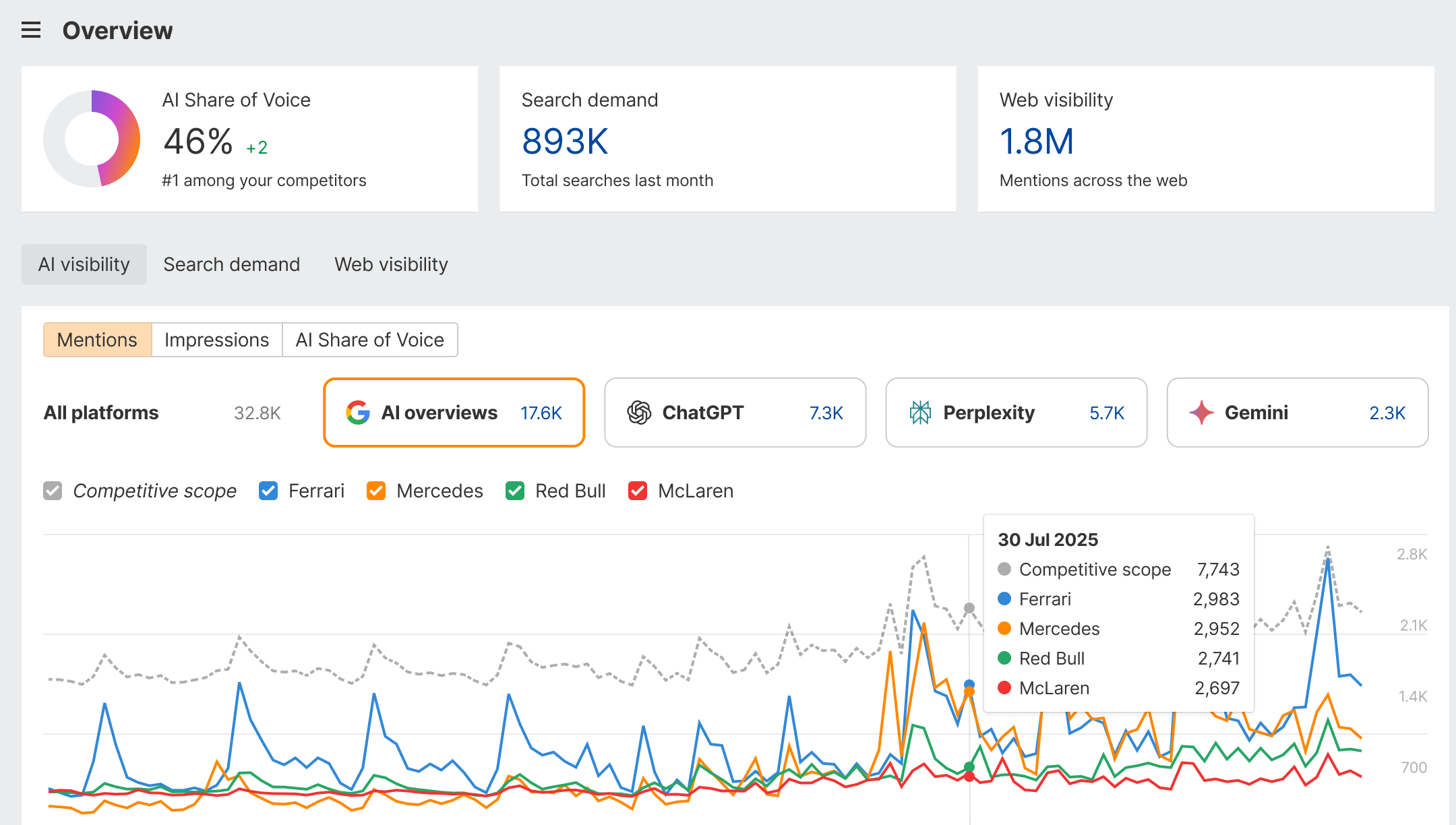
Ahrefs remains the industry standard for backlink analysis and technical SEO, which are foundational for the "Authority" component of GEO.
Category / GEO role: SEO Tool Adapted to GEO
Primary GEO use case: Strategic Data & Authority Building
What the tool does well (GEO strengths):
- Unmatched backlink data helps you build the domain authority required to be cited by AI.
- Excellent for identifying content gaps in traditional search.
- GEO limitations: Very slow to adopt generative AI features; strictly a data tool, not a creation or GEO monitoring tool.
- Best fit for (audience): Technical SEOs.
- GEO-native or GEO-adapted: GEO-Adapted.
- AI / LLM coverage: Google Search.
- Human-in-the-loop: High.
- Content vs visibility focus: Content Focus (via data).
- Pricing: starts at $212/month for Brand radar AI option.
Conductor
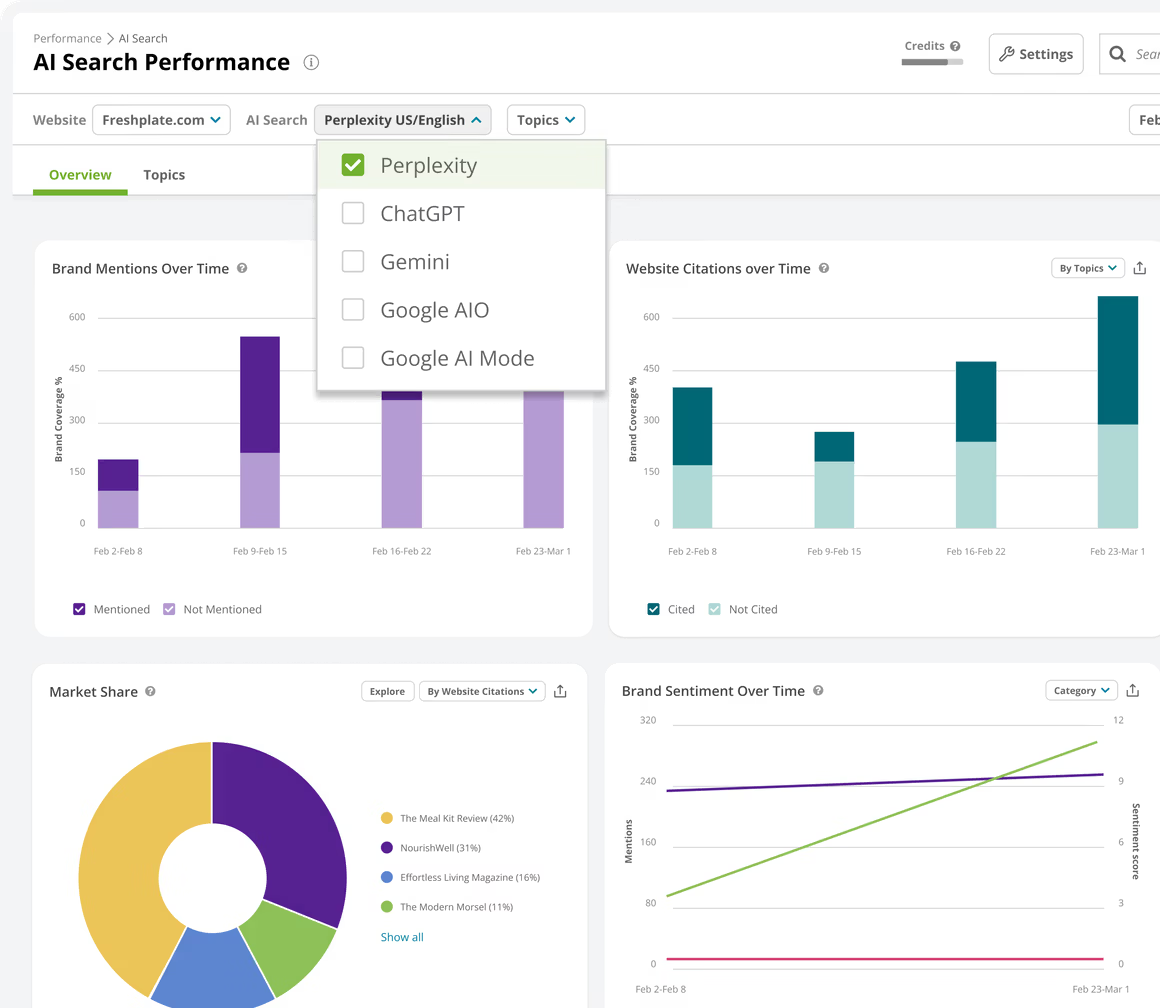
Conductor is an enterprise SEO platform that provides deep insights into search intent and is evolving to track AI Overview presence.
Category / GEO role: SEO Tool Adapted to GEO
Primary GEO use case: Enterprise Strategy & Intent Analysis
What the tool does well (GEO strengths):
- Enterprise-grade reporting on search visibility.
- Strong focus on customer intent, which aligns well with how users query AI chatbots.
- GEO limitations: High cost and complexity; primarily built for traditional SERP tracking.
- Best fit for (audience): Large Enterprise Teams.
- GEO-native or GEO-adapted: GEO-Adapted.
- AI / LLM coverage: Search + AI Insights.
- Human-in-the-loop: Medium.
- Content vs visibility focus: Visibility Focus.
- Pricing: Custom (Enterprise).
Entry-level & diagnostic tools
HubSpot AEO Grader
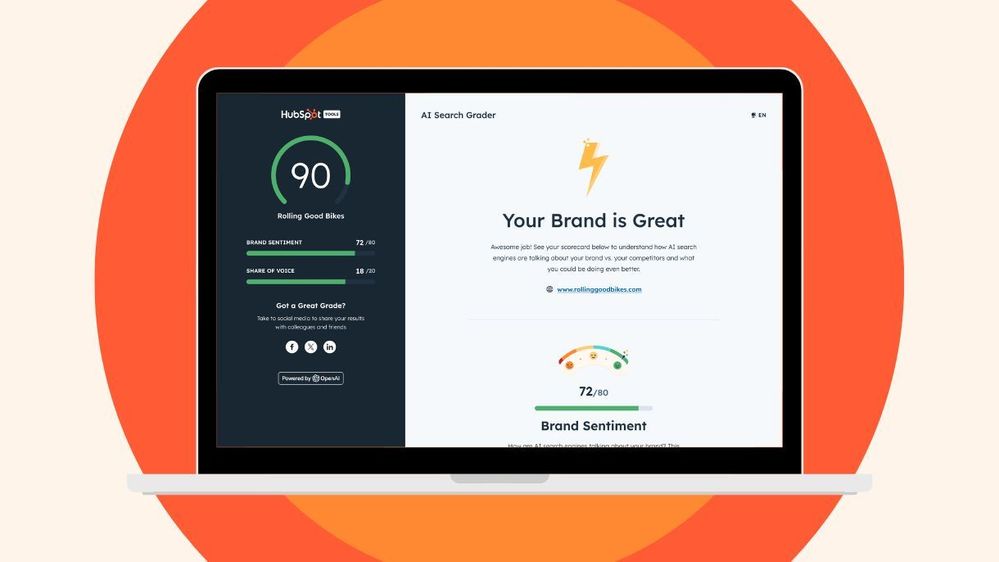
HubSpot offers free tools that provide a baseline assessment of how your brand appears in AI search, serving as a good entry point.
Category / GEO role: Diagnostic Tool
Primary GEO use case: Baseline Assessment & Education
What the tool does well (GEO strengths):
- Provides a quick, free snapshot of brand sentiment in AI.
- Accessible for non-technical marketers to understand the GEO concept.
- GEO limitations: Very basic; does not provide deep analytics or a workflow to improve results. A diagnostic is not a strategy.
- Best fit for (audience): Marketing Generalists and SMBs.
- GEO-native or GEO-adapted: GEO-Adapted.
- AI / LLM coverage: Basic AI Graders.
- Human-in-the-loop: Low.
- Content vs visibility focus: Diagnostic Only.
- Pricing: Free Tools.
How to choose the right GEO tool for your team
Choosing the right tool depends heavily on your team's maturity and goals.
- For content teams: If your primary goal is to produce traffic-driving articles that rank in both Google and AI Overviews, you need a creation platform. This is the specific problem we solve at Blym. Our team previously built Bloggle, Shopify's leading blog builder, helping thousands of businesses optimize their content. We took that experience and applied it to Blym so content teams can scale production without sacrificing the quality signals AI engines demand.
- For enterprise SEO leads: If you need to report on "Share of Model" to the C-suite, a monitoring tool like Profound is essential alongside your creation workflow.
- For SaaS companies: You likely need a hybrid approach, using Blym to write technical, authoritative content that gets cited, and a lightweight tracker like Otterly.AI to monitor brand sentiment.
Common mistakes when choosing a GEO tool
As you evaluate these options, avoid these common pitfalls:
- Confusing "generation" with "optimization": Buying a tool just because it uses GPT-4 does not make it a GEO tool. If the software doesn't analyze live SERPs or structure data for retrieval, it's just a writer, not an optimizer.
- Ignoring brand voice: AI engines prioritize authoritative, consistent entities. If your content sounds generic, it won't be cited. Blym addresses this by integrating brand voice preservation directly into the workflow, so every piece of content reinforces your entity's authority.
- Looking for "GEO hacks": There are no shortcuts here. Prompts influence generation, not selection or citation. AI engines cite sources based on clarity, structure, and expertise, not because of clever prompting tricks.
- Accepting heavy editing workloads: Many teams choose cheap AI tools only to spend hours rewriting the output. A true GEO platform should deliver publish-ready content. Blym's proprietary engine is designed to minimize the editing burden while maximizing strategic input.
Conclusion
The transition from SEO to GEO is not just about new technology; it is about a fundamental shift in how information is retrieved. To stay visible, brands must move beyond simple keyword targeting and focus on becoming the cited authority in their niche.
Whether you need deep enterprise monitoring or a robust content creation engine, the tools listed above represent the best of this new industry. For teams ready to start writing content that ranks in search and gets cited by AI, we invite you to explore Blym AI.
Frequently asked questions
What is the difference between SEO and GEO tools?
SEO tools focus on ranking URLs in search engine results pages (SERPs) using keywords and backlinks. GEO tools focus on optimizing content to be selected, synthesized, and cited as a source within generative AI answers (like ChatGPT or AI Overviews).
How do I measure success with a GEO tool?
Success in GEO is measured by "citability" and visibility, specifically, how often your brand or content is referenced in AI-generated responses for relevant queries, rather than just your numerical ranking on a page.
Can I use traditional SEO tools for GEO?
Traditional SEO tools like Ahrefs or Semrush provide essential data on authority and keywords, which are still factors in GEO, but they lack the specific capabilities to track citations inside chatbots or optimize content structure for LLM retrieval.
Is GEO just about ranking in ChatGPT?
No, GEO encompasses visibility across all generative engines, including Google's AI Overviews (SGE), Perplexity, Claude, and Bing Chat. It is about optimizing your entity's authority so that any model recognizes you as a trusted source.


I’m the Founder & CEO of Blym AI, a GEO & SEO software designed to help companies create on-brand content that ranks on Google and LLMs like ChatGPT.
I specialize in search-driven content strategy, with a strong focus on SEO, GEO, and AI-assisted writing.
On a daily basis, I research AI writing systems, work closely with customers, and continuously improve Blym to match real-world content and search requirements.
Blym is built with humans at the center. It doesn’t aim to replace expertise, but to help industry experts express their knowledge clearly and efficiently, turning it into high-quality, flexible content that performs in modern search environments.